Field archive
Photographs, tied to the story
134 frames from 2006 to 2025. None of them is decoration. Each one is filed under the chapter it belongs to — tap through to the passage.
Prologue — Shanghai Before Shanghai
18 photographs · each one belongs to a passage in this chapter
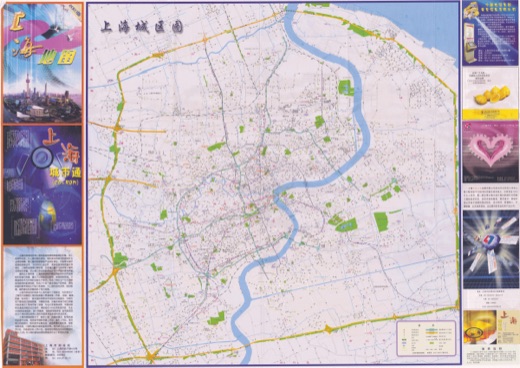 The first map of Shanghai I actually held上海城区图 (Map of Shanghai's Urban Area), 2003 edition, published by the Shanghai Surveying and Mapping Institute (上海市测绘院) as an ordinary tourist city map. The copy I bought from a stall on the Bund waterfront in the summer of 2006 stayed in Bangkok; this scan of the same edition comes from the Virtual Shanghai Project's map archive. Courtesy of the Virtual Shanghai Project (Institut de Recherches Asiatiques, Aix-Marseille University–CNRS), virtualshanghai.net. Not a Virtual Shanghai-copyrighted work — they archived a third-party commercial map — so cite the Institute, not the project, if you reuse it.Read in Prologue →
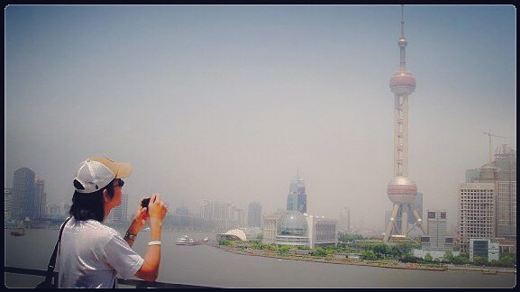 The first rooftopTaken the year after the Tsinghua–MIT studio trip that started the whole obsession, by a friend, Sun Penghui, on a Shanghai roof. This is close to the earliest photographic evidence that any of this was coming.Read in Prologue →
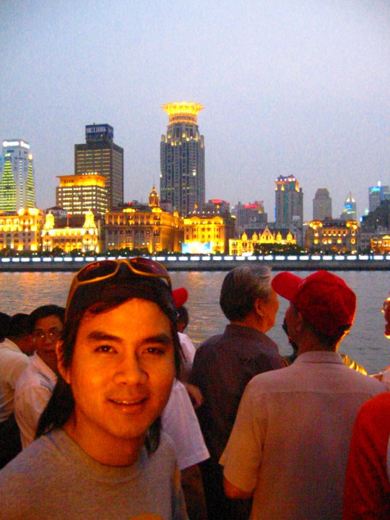 China and I, since 2006The author's own title for this one, kept as written. 2006 is the summer of the one-week reconnaissance trip with the MIT–Tsinghua urban-design studio — the trip the Prologue says he left “with a small obsession that had not been there when I arrived.”Read in Prologue →
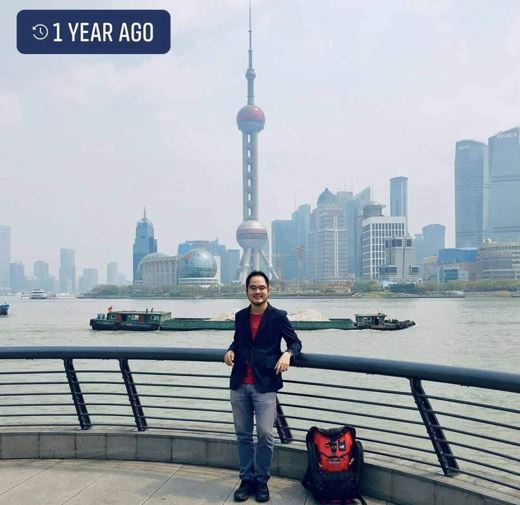 First time back after the PhDBetween the 2016 defence and this trip, the author had left academia for design consultancy work and then for Thailand's smart-city programme. This is the first return to Shanghai on the far side of both.Read in Prologue →
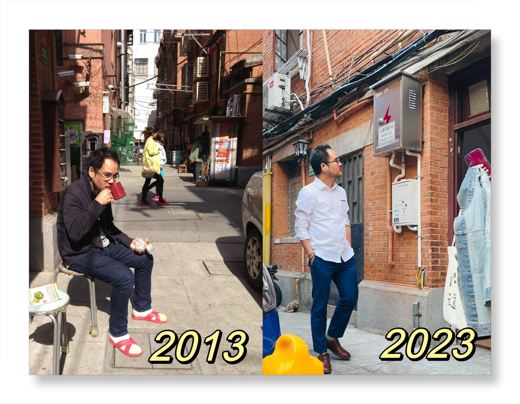
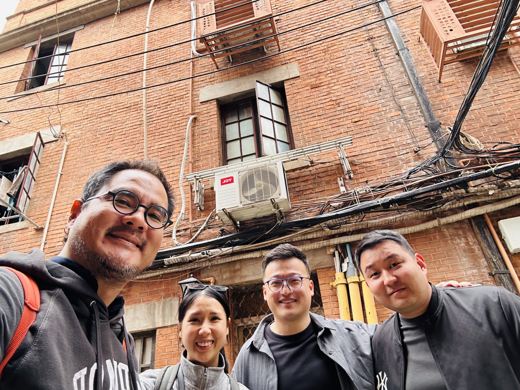 Back in ShanghaiThe autumn 2023 return the Prologue opens on — after nearly four years away, the longest gap of the author's Shanghai life, closed by a high-speed train from Shenzhen and a walk through the old gate in a conference suit.Read in Prologue →
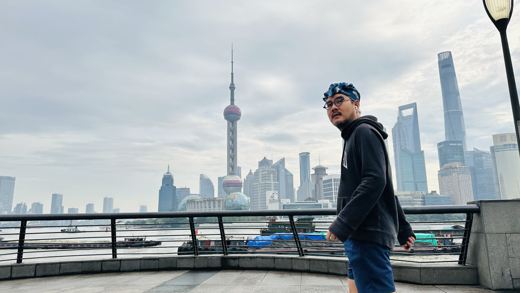 Back after COVIDThe pandemic closed the country to a Thai national with a research visa until well into 2023. This is what the other side of that closure looked like.Read in Prologue →
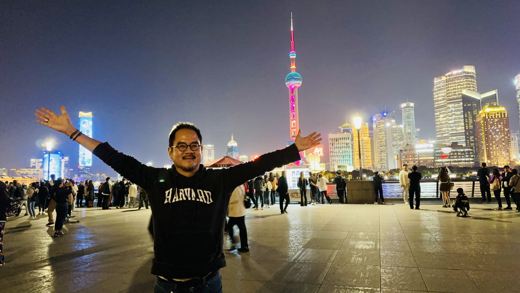 The first time in many yearsSame trip, same disbelief. The Prologue's account of this return — the old neighbours still sitting where they always sat, the thermoses of green tea — starts here.Read in Prologue →
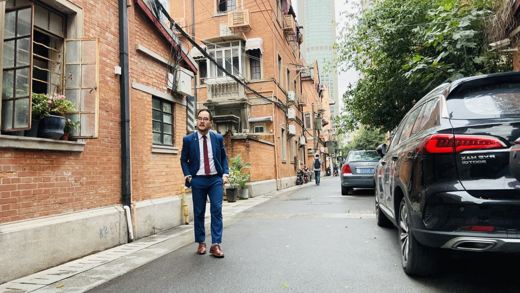 Straight to the lane, first stopThe author's own caption, kept whole. Before the hotel, before anything else — the lane, to see what had changed and what had not.Read in Prologue →
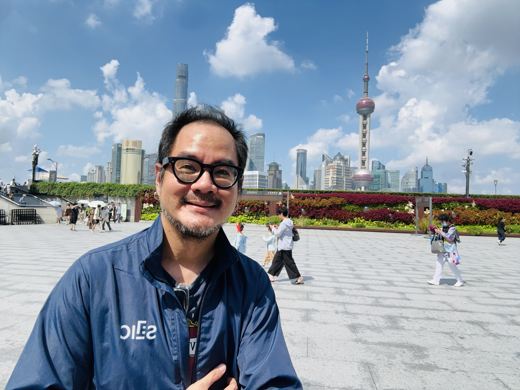 Coming back to the BundThe Bund the Prologue keeps returning to as a measuring stick: the same skyline, a city that had, by every visible metric, become quieter, cleaner, and more efficient in the years the author was building smart-city platforms in southern Thailand.Read in Prologue →
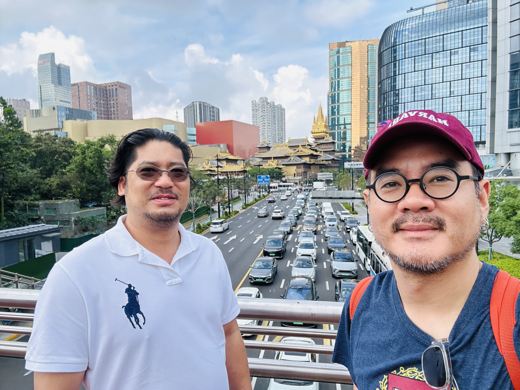 Walking around, 2024One of the walking trips with Chollawan ‘Plub’ Wanichpan that the Prologue credits with helping the author see the compound “with the eyes I had grown since 2016, rather than the ones I had then.”Read in Prologue →
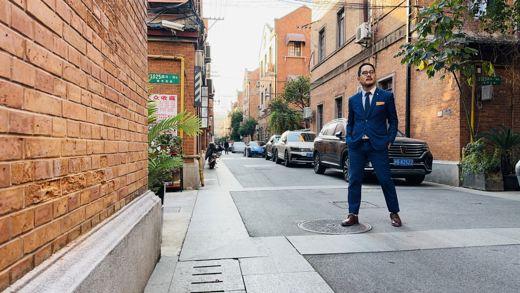 Walking the laneThe lane is narrower than you think. The Prologue's closing line, more or less, photographed.Read in Prologue →
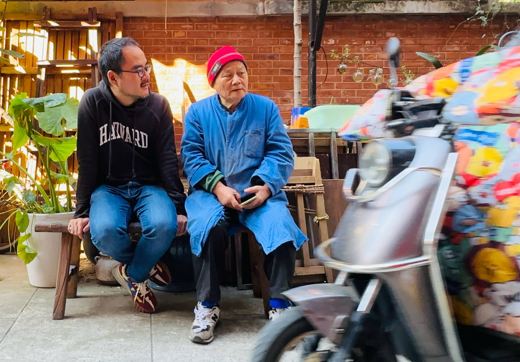 Chatting with an old neighbourTen years on from fieldwork, still recognised at the gate — the fact the Prologue calls more methodological than personal: proof the compound's social memory was intact enough to hold a Thai anthropologist who had been gone for years.Read in Prologue →
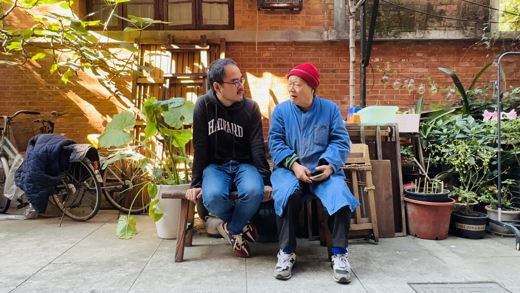 A nice day in the laneThe author's own caption. This is what the reunions actually looked like — not an interview, just a conversation picked back up after a decade's gap.Read in Prologue →
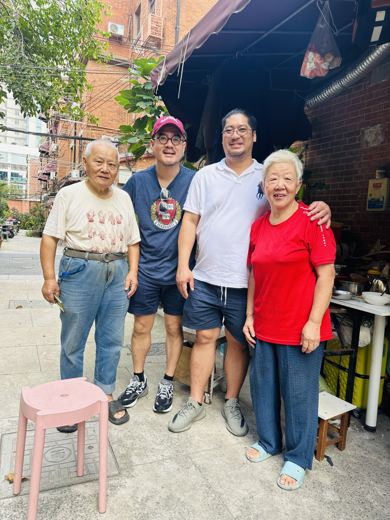 Meeting the best neighbours againThe same handful of faces the fieldwork chapters return to again and again, older now, still in the lane.Read in Prologue →
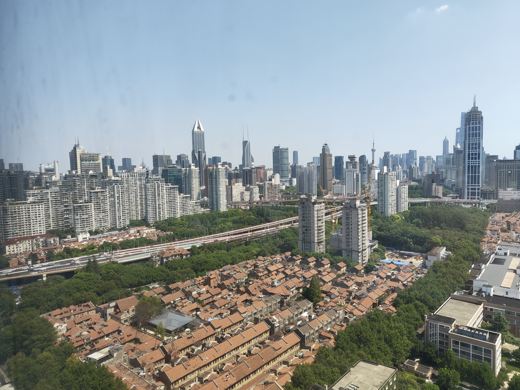 Shanghai from the windowNot the tingzijian window — a later one. Still Shanghai, still framed by someone else's glass.Read in Prologue →
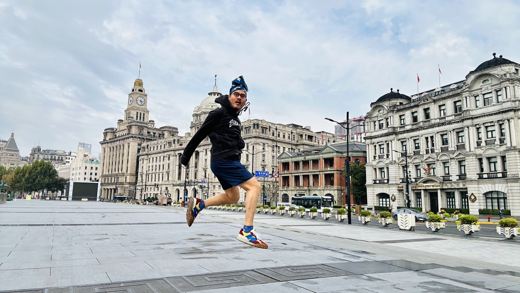 Jumping on the bandwagonFiled by the author under exactly that title. Some returns call for a little theatre.Read in Prologue →
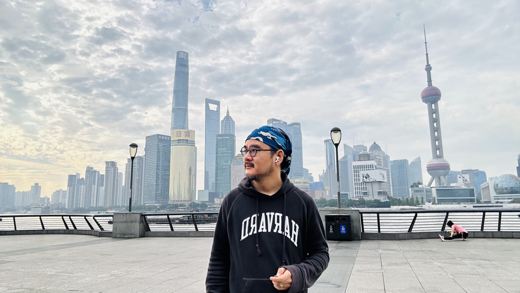 A morning run, thinking about the cityOne of the quieter rituals of the 2023 return — moving through Shanghai on foot before the day's obligations start, the same slow-attention habit the whole book is built from.Read in Prologue →
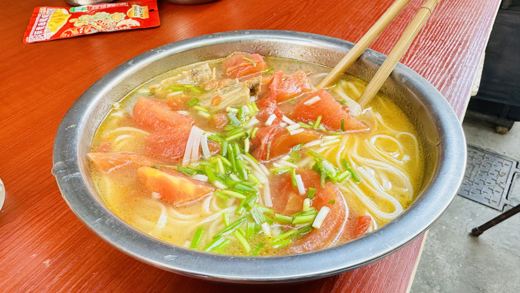 The noodles Teacher Hu always makesHand-pulled noodles in tomato soup — the dish the shopkeeper Chapter 2 calls Teacher Hu has cooked for the author on every visit since fieldwork. Some relationships in this book are still, ten years later, exactly this uncomplicated.Read in Prologue →
Introduction — Where Do You Live?
10 photographs · each one belongs to a passage in this chapter
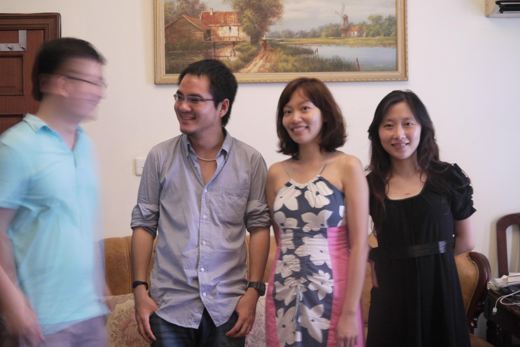 First lilong visits, with Harvard GSD friendsTwo years before the sixteen-month fieldwork lease began, an early scouting trip through Shanghai's rowhouse compounds with friends from Harvard's Graduate School of Design — the trip that turned a childhood television memory into an actual research question.Read in Introduction →
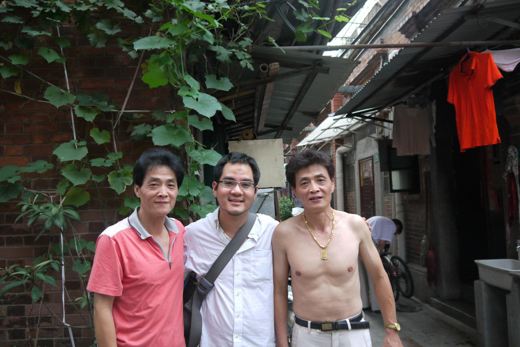 First visit to the compound that became Tranquil LightThe author's own caption, and worth reading literally: this is the gate, two years before he moved in, before it had a pseudonym, before it was anything other than a compound he was curious about.Read in Introduction →
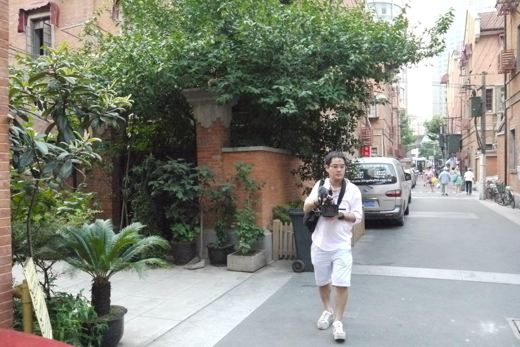 First night at Tranquil Light, and the hangover to prove itKept exactly as captioned. Not every fieldwork origin story needs to be dignified to be true.Read in Introduction →
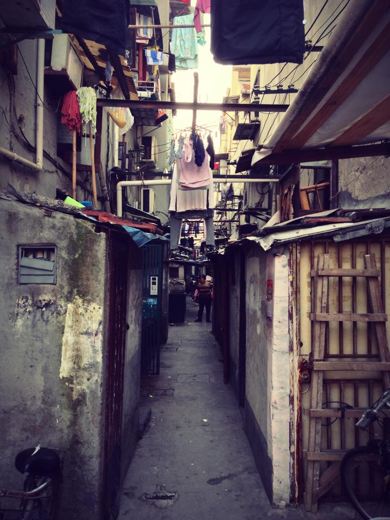 First impressions of the laneBefore the vocabulary — before ‘lilong,’ before *tingzijian*, before any of the words this book spends three hundred pages defining — just the impression of the lane itself.Read in Introduction →
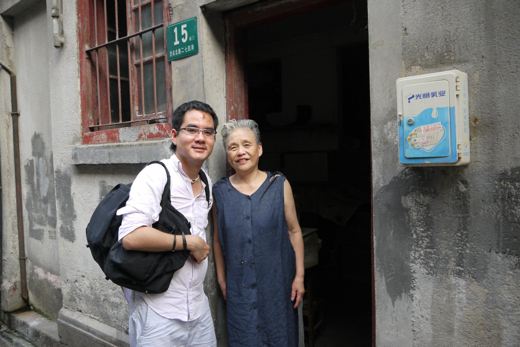 With a neighbour, before the lease was signedTwo years before he was anyone's tenant, already someone people in the lane recognised and stopped to talk to.Read in Introduction →
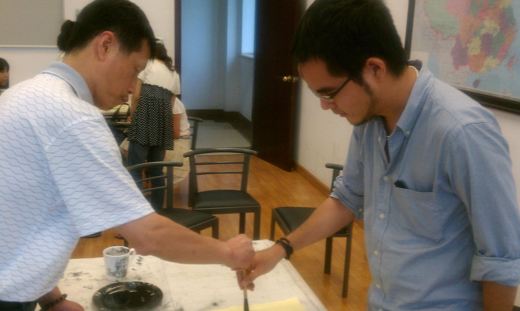 Learning calligraphy at FudanAn early attempt at the kind of literacy the Introduction's genealogy passage says the author's own father quietly kept up his whole life, reading Chinese characters off a dubbed television screen.Read in Introduction →
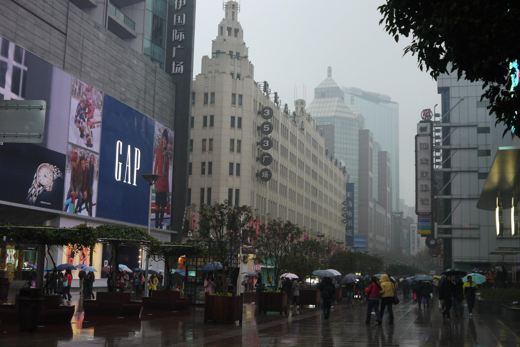 Nanjing Road in the rainA research trip in the year between the first lilong visits and the start of formal fieldwork — the commercial spine of the city, in weather that empties it of tourists and leaves the texture behind.Read in Introduction →
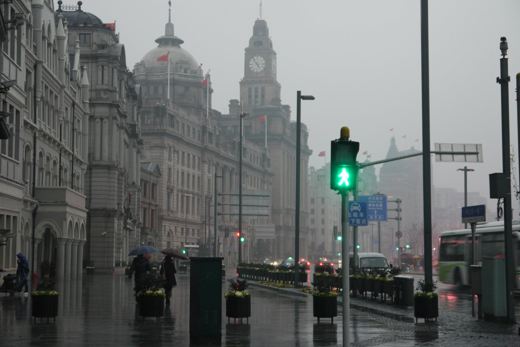 The Bund in the rainWinter fieldwork scouting, a year before the doctoral lease began. The Bund is the postcard; the book argues the postcard is not where the city actually lives.Read in Introduction →
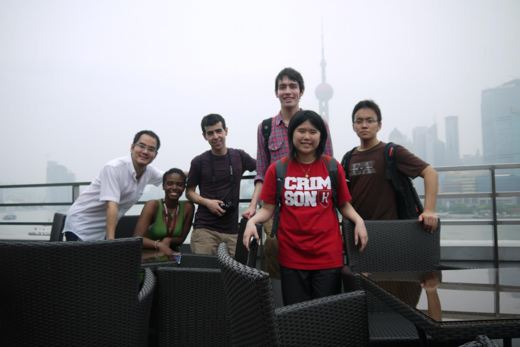 My life, 2012–2013The author's own title for the stretch of time between the scouting trips and the year the fieldwork proper began.Read in Introduction →
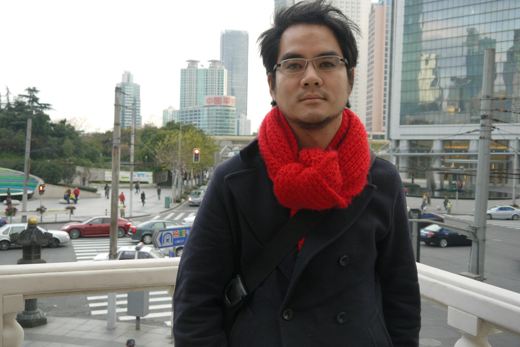 A quick trip backOne of the many shorter visits that filled the years between the long fieldwork stays — the ordinary, undocumented rhythm of a relationship with a city that outlasted any single research grant.Read in Introduction →
Acknowledgments
31 photographs · each one belongs to a passage in this chapter
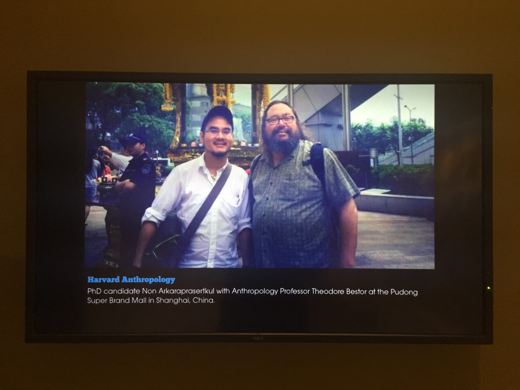 With Ted Bestor in ShanghaiThe advisor the whole book is dedicated to, visiting the field site in person during the first year of fieldwork — the same Ted Bestor whose *Neighbourhood Tokyo* the Introduction credits with teaching the author ‘what a city looked like when it was being looked at slowly.’Read in Acknowledgments →
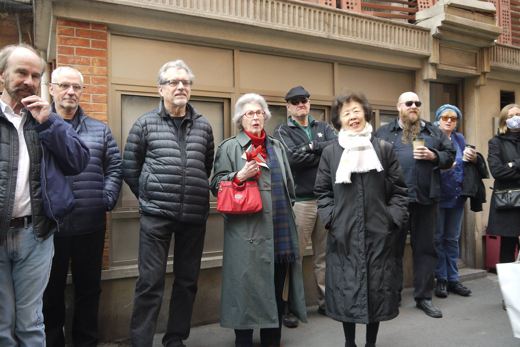 Touring rowhouses with Li Jie and Tess JohnstonTess Johnston — the Acknowledgments' ‘most complete historian of the city I ever met, and the most generous with what she knew’ — showing guests the fabric of old Shanghai in person, the same generosity she extended to the author in her own French Concession library.Read in Acknowledgments →
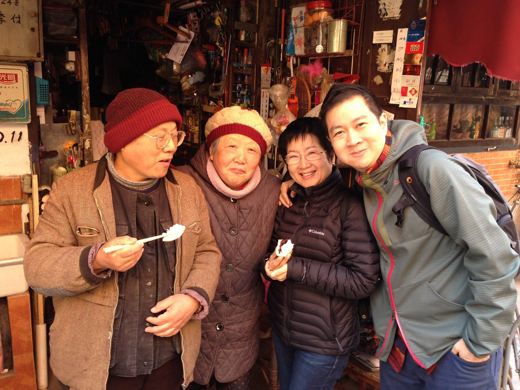 Mom and my brother, with my informantsThe Acknowledgments' closing line — ‘my mother and my brother, who waited longer than they should have had to’ — made briefly literal: family and fieldwork, in the same frame.Read in Acknowledgments →
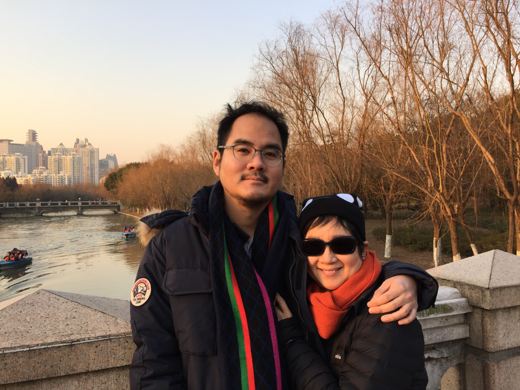 Mom visits the field siteA parent seeing, in person, what sixteen months in an eight-square-metre room actually looked like.Read in Acknowledgments →
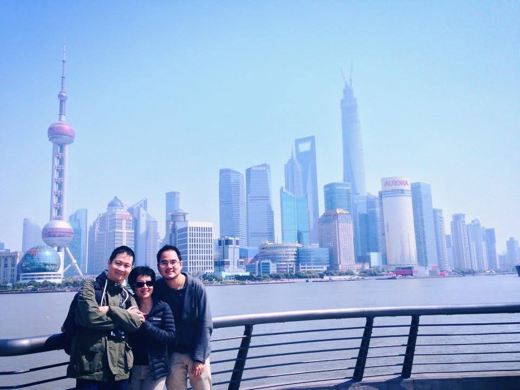 With mom and my brotherOne more frame from the same visit — the family the Prologue and Acknowledgments both circle back to.Read in Acknowledgments →
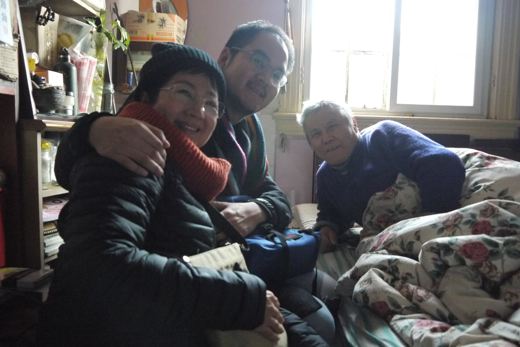 Mom meets the informantsThe people who make up this book's ethnography, meeting the people who made the author possible in the first place.Read in Acknowledgments →
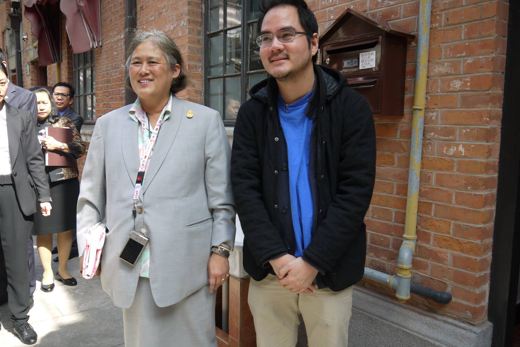 The Princess in the laneA year into fieldwork, renting a room of about five square metres to understand the density of old Shanghai from the inside, the author went out one cool morning for noodles and found the compound full of people in suits. Asking what was happening, he learned that Princess Maha Chakri Sirindhorn was visiting his own neighbourhood — drawn, he was told, by its architecture: brick and ornament in a European idiom laid over a Chinese plan, including the way its buildings turn their fronts to the south. She carried, as she reportedly always does, a notebook and a camera.Read in Acknowledgments →
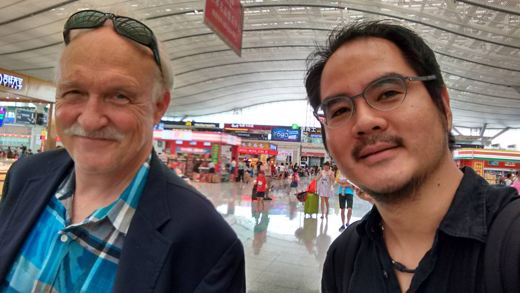 With a professor from the University of VirginiaOne of the visiting scholars whose conversations, however brief, fed into the book's wider sense of what other China-watchers were seeing.Read in Acknowledgments →
 Drinking in Beijing with MaksMaks, a student from Cornell, was one of the friendships the fieldwork years produced outside the compound gates entirely — Beijing, not Shanghai, but the same era.Read in Acknowledgments →
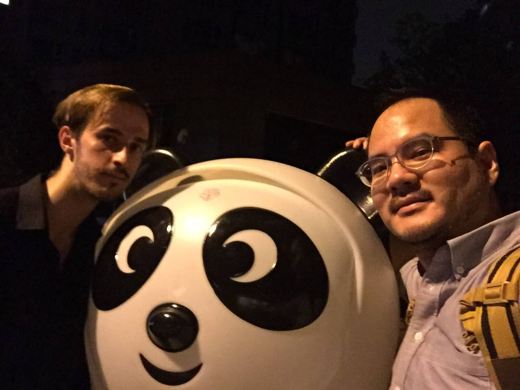 A good night out, with Maks from CornellThe author's own title. Not every relationship in this book needed to be professional to matter.Read in Acknowledgments →
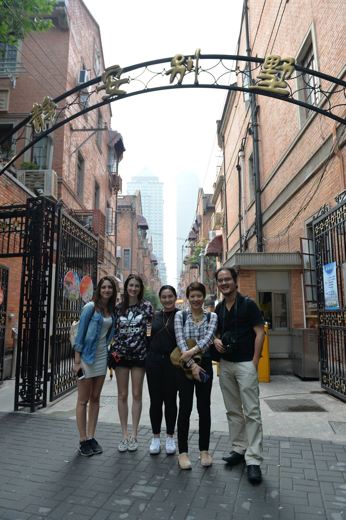 With NYU Shanghai summer studentsThe teaching role Jeffrey Lehman gave the author in 2014 extended the Shanghai stay by two years and shaped, by the Acknowledgments' own account, ‘the kind of anthropologist I was becoming.’Read in Acknowledgments →
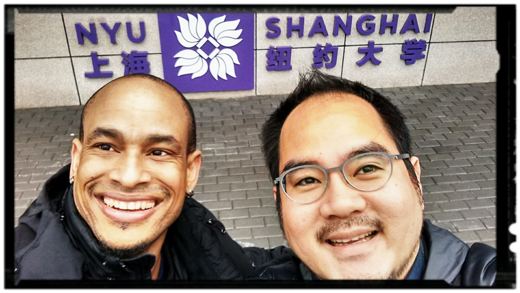 As a postdoc at NYU ShanghaiThe postdoctoral position that, per the Prologue, kept the fieldwork from ending a year before it was actually ready to end.Read in Acknowledgments →
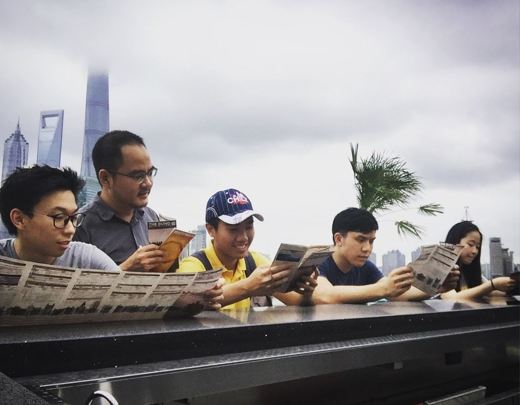 Teaching a summer course at NYU ShanghaiBy 2016, teaching and fieldwork had become close to the same activity — both conducted in the same city, often with the same students in tow.Read in Acknowledgments →
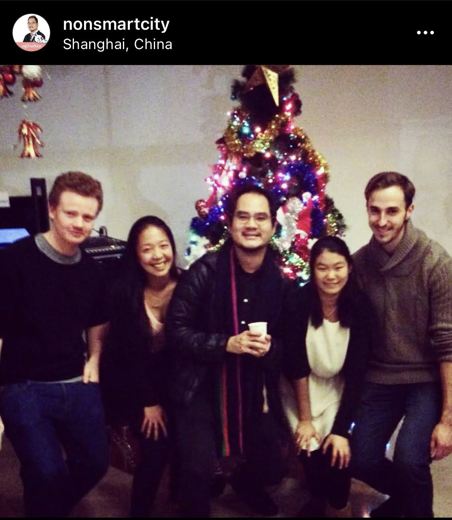 Christmas at Fudan, with studentsA visiting fellowship at Fudan ran alongside the NYU Shanghai teaching in these years — one more institutional home in a fieldwork period that had several.Read in Acknowledgments →
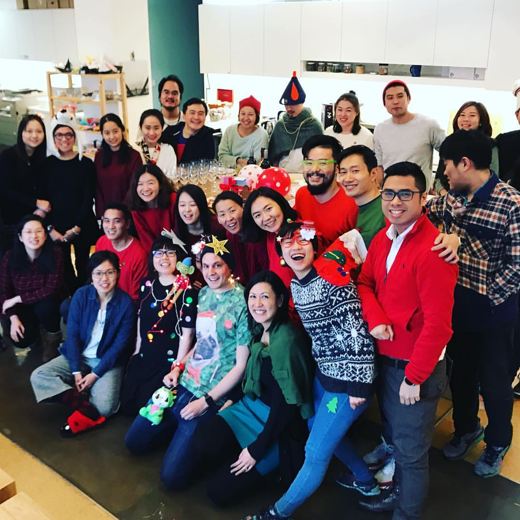 Christmas at IDEO ShanghaiDesign-world colleagues, in the same period the author would soon leave academia to work for design consultancies full-time — the stretch the Prologue describes as teaching him ‘the gap between what designers think people want and what people actually do once they are inside the design.’Read in Acknowledgments →
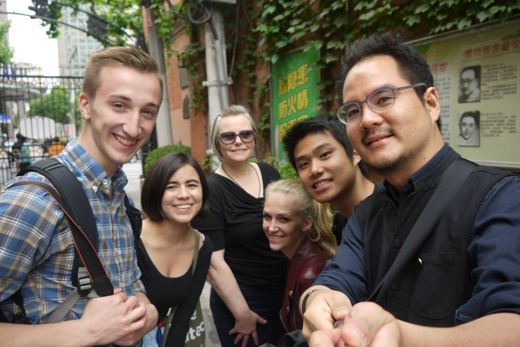 With a student from FudanOne of many one-on-one relationships the teaching years produced, outside the formal record of any single chapter.Read in Acknowledgments →
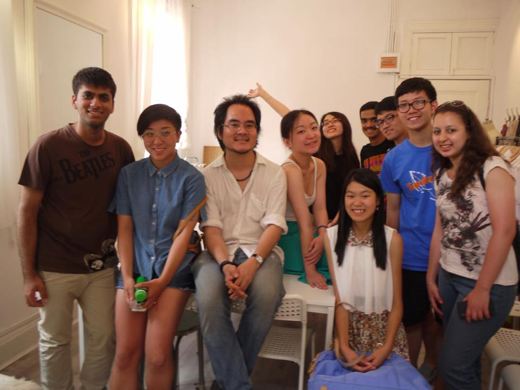 With students and informants togetherThe blurred line the whole book depends on: by the later fieldwork years, students, informants, and friends were often the same people.Read in Acknowledgments →
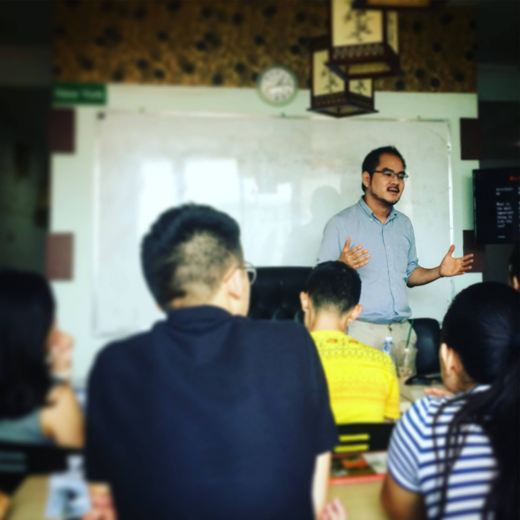 Teaching in ChinaTwo years after the 2016 defence, still teaching, still in China — the long tail of a fieldwork relationship that never really had a clean end date.Read in Acknowledgments →
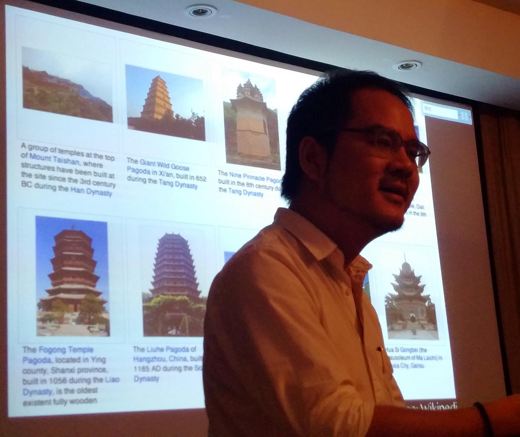 Teaching Chinese and modern architecture at SISUOne more classroom in a fieldwork period that, in retrospect, looked as much like a teaching career as a doctoral project.Read in Acknowledgments →
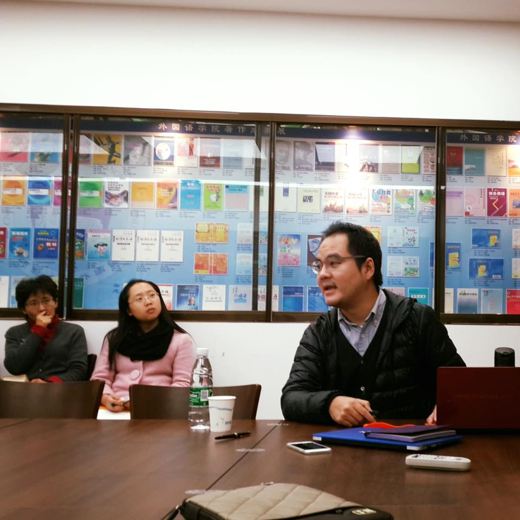 First talk given entirely in ChineseA milestone the footnotes don't record anywhere else: the first time the fieldwork's working language became the lecturing language too.Read in Acknowledgments →
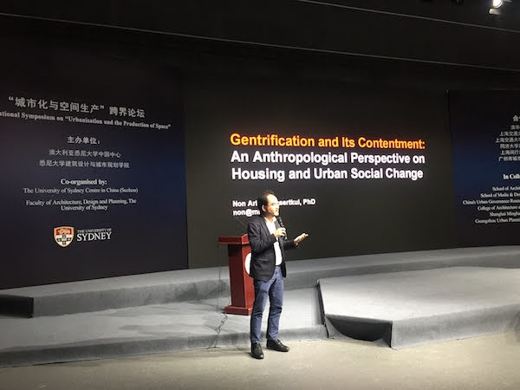 Lecturing to Sydney University and Tongji facultyThe research kept travelling to new audiences well after the fieldwork itself had ended — Sydney and Tongji University together, in this case.Read in Acknowledgments →
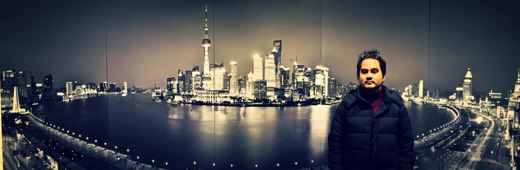 At the Power Station of ArtShanghai's contemporary art scene, visited in the same year the fieldwork lease began — the other Shanghai the compound's residents were, in their own ways, also negotiating.Read in Acknowledgments →
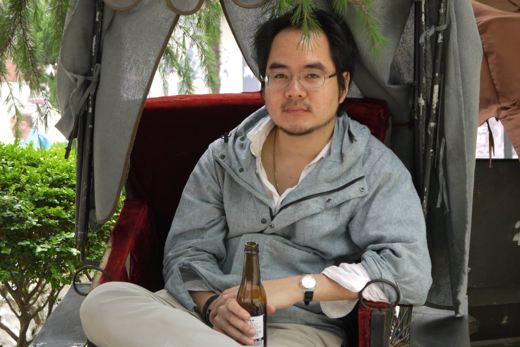 A day off, at Shanghai Film ParkFieldwork needs days off too. This was one of them.Read in Acknowledgments →
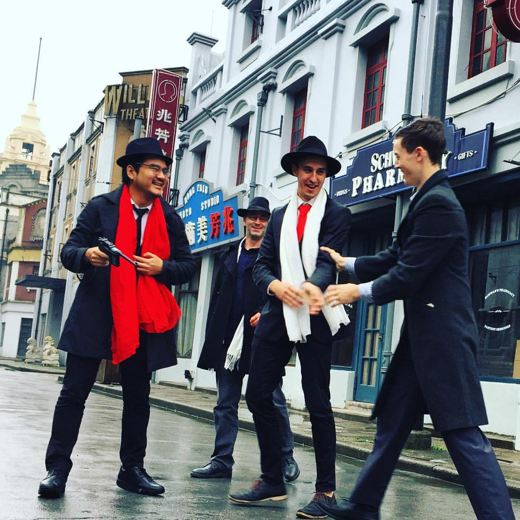 Shanghai Film Park, near the endOne of the last visits before the 2016 defence — the backlot version of old Shanghai, revisited as the real fieldwork was wrapping up.Read in Acknowledgments →
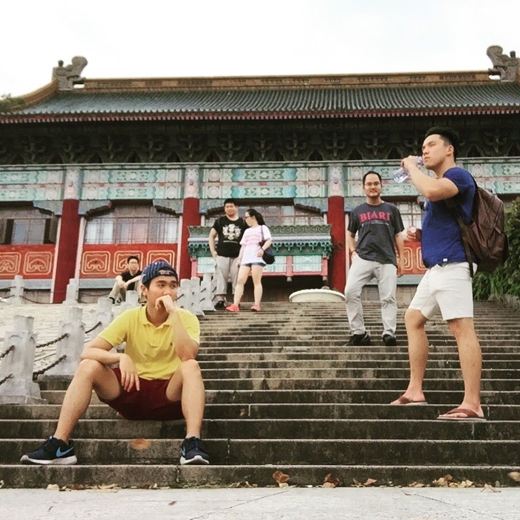
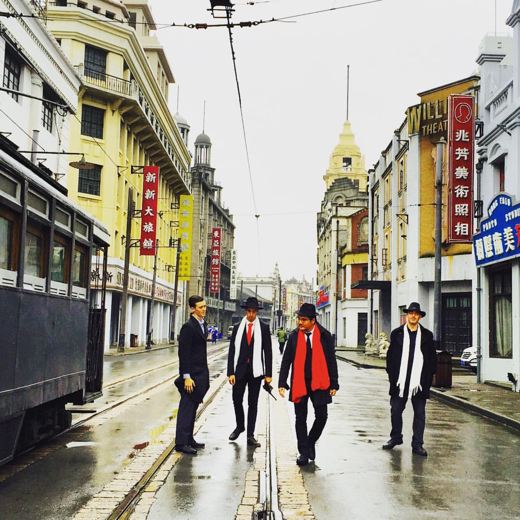 Shanghai Film ParkThe studio backlot's reconstructed 1930s streets — a strange, useful contrast to the actual, still-standing 1930s streets of Tranquil Light.Read in Acknowledgments →
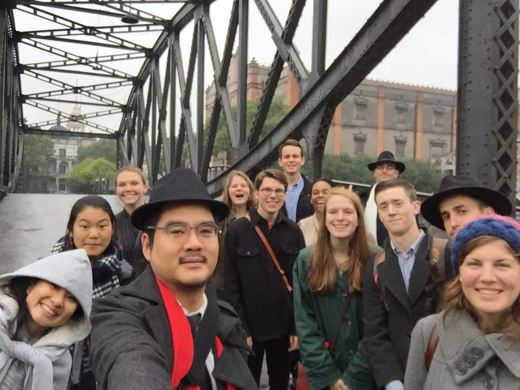
 Shanghai Film ParkAnother visit to the same backlot — old Shanghai, rebuilt for the cameras rather than lived in.Read in Acknowledgments →
 Shanghai Film Park, with studentsThe backlot as a teaching tool: a fast way to show a class what ‘old Shanghai’ means as a visual cliché, before spending a semester complicating it.Read in Acknowledgments →
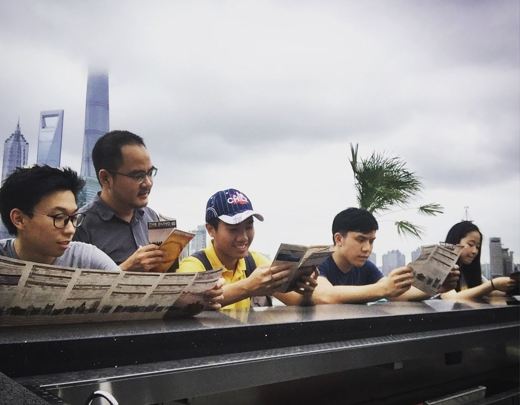 On a rooftop at the Bund, Pudong behind usThe classic Shanghai postcard shot — two skylines, one river — with an actual class in it rather than tourists.Read in Acknowledgments →
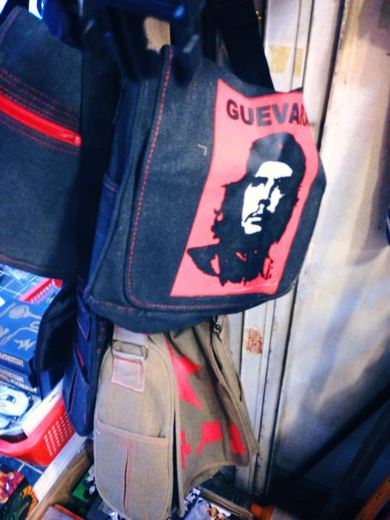 ShanghaiPart of the same 2014 run.Read in Acknowledgments →
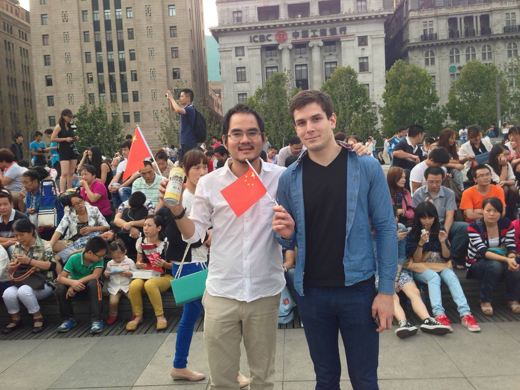 First National Day holiday during fieldworkChina's National Day, and the author's first as a fieldworker rather than a visitor — a week when the whole country, Tranquil Light included, was visibly off the clock.Read in Acknowledgments →
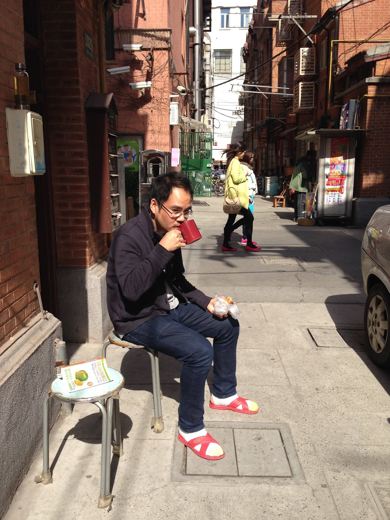 From the fieldwork yearsOne of several unlabelled frames from the core fieldwork period, kept in the record as part of its ordinary texture.Read in Acknowledgments →
Chapter 1 — A Community at the Centre of the World
24 photographs · each one belongs to a passage in this chapter
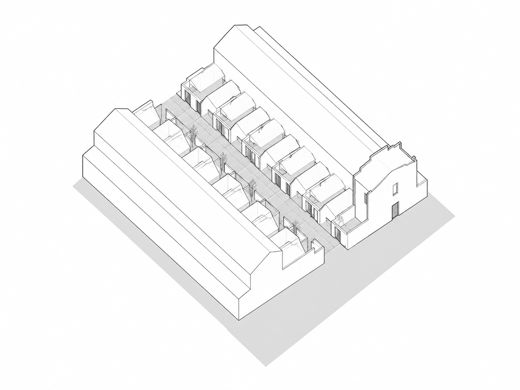 The lane, end to endAn AI-generated perspective view of a full branch lane — the row of pitched roofs, the gate at the end, the whole thoroughfare in one frame. A companion piece to the gate-facade studies, same inspiration and same caveat about the original artist's credit.Read in Chapter 1 →
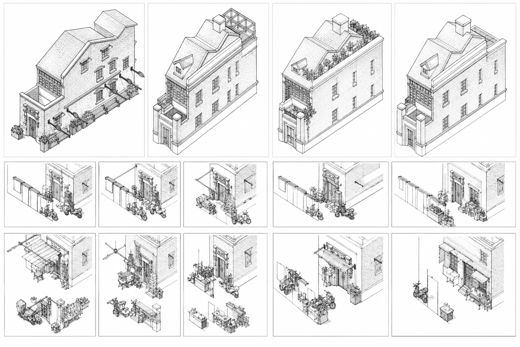 Shikumen gate, in fifteen studiesAI-generated architectural studies of a shikumen gate and entrance bay — brick coursing, stone door surround, mailbox, scooters, the awning residents rig over their own doorway. Made for this book, stylistically inspired by an isometric architectural-illustration approach seen on ArtStation (artwork rJ40KO); redrawn to match the International Settlement lilong the author actually lived in, not the more ornamented French Concession style. The original ArtStation page returned a bot-blocked response to every automated attempt to identify its artist for credit — if you can find the name, it belongs here.Read in Chapter 1 →
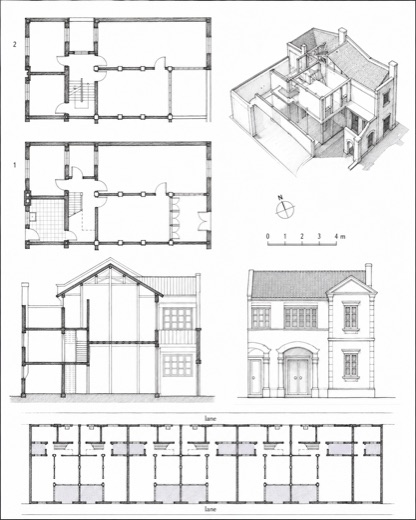 One house, disassembledAI-generated composite: two floor plans, an axonometric cutaway, a cross-section, a front elevation, and the repeating row in plan with the lane running above and below. The clearest single picture in this book of what ‘attached, three-storey, one shared kitchen and bathroom per five households’ (Chapter 1) actually looks like in section. Composite typology, not a survey of Tranquil Light — and, at 1,122×1,402 pixels, below the print figure floor, so it stays a web plate rather than a numbered print figure.Read in Chapter 1 →
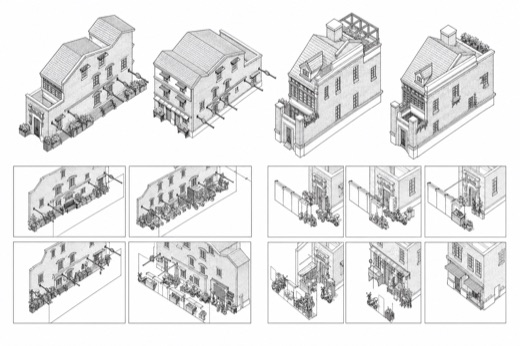 The compound, from above and at the gateAI-generated isometric studies of the building volumes, paired with twelve close studies of gate and entrance detail — scooters, potted plants, the awnings residents rig over their own doorways. A companion to the shikumen gate-facade study above, made in the same pass and under the same attribution caveat.Read in Chapter 1 →
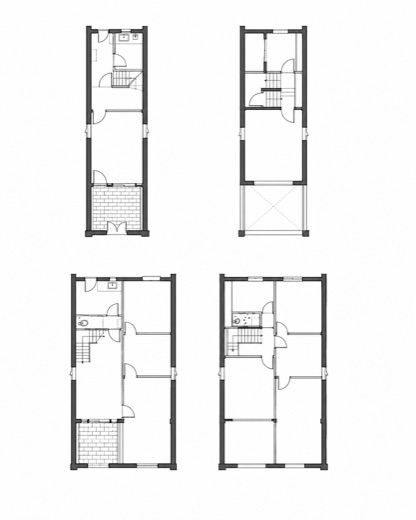 Four ways to fit a kitchen and a stairAI-generated technical floor plans showing four variations on the same rowhouse footprint, kitchen and bathroom and stair repositioned in each. A supplementary reference alongside Figure 1.2's compound-level axonometric; composite types, not measured drawings of any single house in Tranquil Light.Read in Chapter 1 →
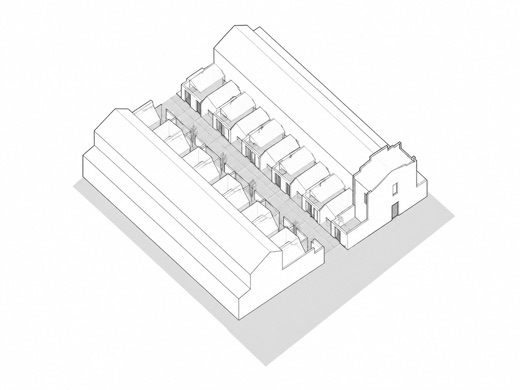 Three rows, in isometricAn earlier AI-generated isometric study of the same 'three rows, courtyards, branch lanes' geometry Figure 1.2 draws. Kept here as a second, quieter view of the same packed massing — no colour, no gate, just the roofline.Read in Chapter 1 →
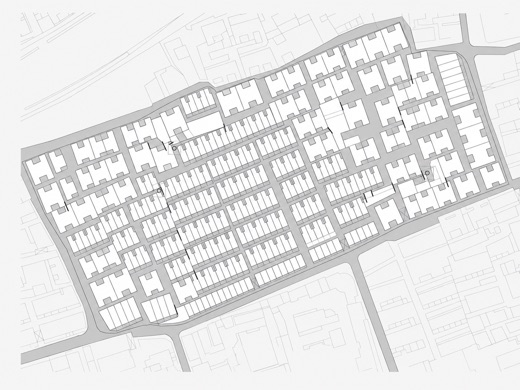 How a lilong district actually knits togetherAn AI-generated urban-morphology plan of a full lilong district — every rowhouse, every branch lane, every street edge, drawn clean and grounded. This is the reference the book's Figure 1.2 axonometric was rebuilt to match, after an earlier draft had the houses floating with no visible ground plane beneath them.Read in Chapter 1 →
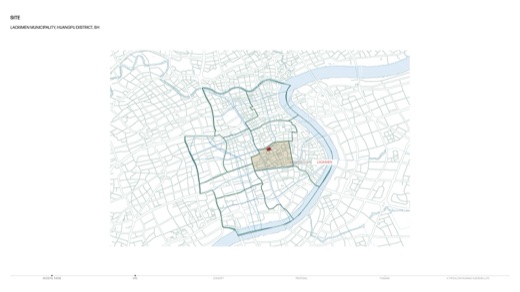 Where a remaining lilong sits in the cityNot Tranquil Light, and not the author's work: a site map of Laoximen, a surviving lilong district in Shanghai's Huangpu district, showing how one of the last hundred compounds sits inside the city's street grid and river bend. From Jieru Xue, “A Community for the Invisible: Aging within the Lilong in Shanghai” (Master's thesis, The Royal Danish Academy, Institute of Architecture, Urbanism and Landscape, Urbanism and Societal Change programme, 2024). Reproduced with attribution; project page at kglakademi.dk/da/projekt/community-invisible-aging-within-lilong-shanghai.Read in Chapter 1 →
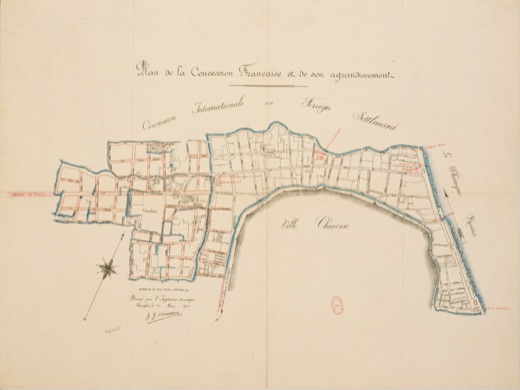 The French Concession's edge, drawn in 1900J.-J. Chollot, ingénieur, «Plan de la Concession Française et de son agrandissement», Shanghai, 10 May 1900. Held by the Bibliothèque Nationale de France (Gallica); digitised copy Courtesy of the Virtual Shanghai Project (Institut de Recherches Asiatiques, Aix-Marseille University–CNRS), virtualshanghai.net. Public domain.Read in Chapter 1 →
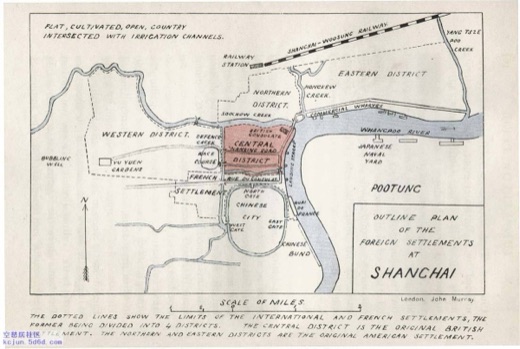 The whole settlement, in outline“Outline Plan of the Foreign Settlements at Shanghai,” London: John Murray, 1899–1900, scale 1:63,360. Original source otherwise unrecorded. Courtesy of the Virtual Shanghai Project (Institut de Recherches Asiatiques, Aix-Marseille University–CNRS), virtualshanghai.net. Public domain.Read in Chapter 1 →
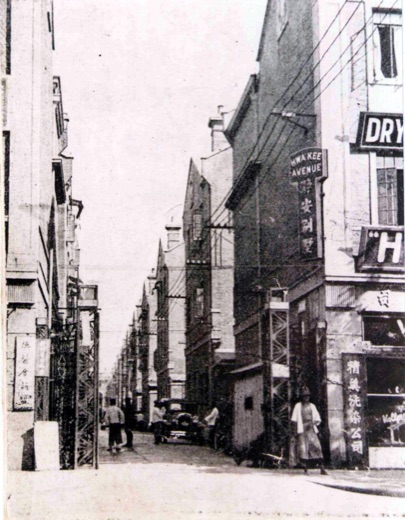 Jing'an ‘villa,’ 1926A branch lane off Hwa Kee Avenue in the Jing'an lilong, built in 1926, photographed some time between 1926 and 1939. Black-and-white photograph, Institut d'Asie Orientale collection. Courtesy of the Virtual Shanghai Project (Institut de Recherches Asiatiques, Aix-Marseille University–CNRS), virtualshanghai.net. Public domain.Read in Chapter 1 →
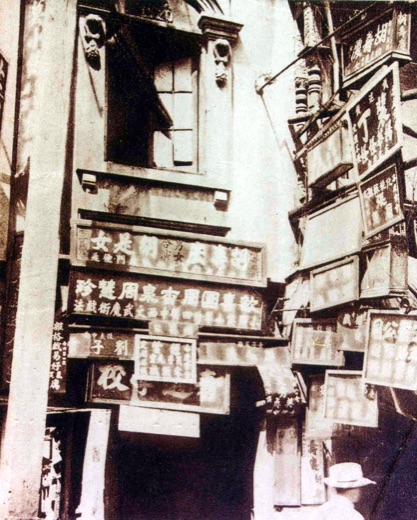 A lilong entrance, papered in nameplatesIndividual nameplates crowding a lilong doorway, documenting the licensed sex trade the type also housed in this period — the photograph this chapter's footnote on lilong's typological elasticity draws on. Black-and-white photograph, Institut d'Asie Orientale collection, dated 1910–1949. Courtesy of the Virtual Shanghai Project (Institut de Recherches Asiatiques, Aix-Marseille University–CNRS), virtualshanghai.net. Public domain. See Christian Henriot, *Prostitution and Sexuality in Shanghai: A Social History, 1849–1949* (Cambridge: Cambridge University Press, 2001).Read in Chapter 1 →
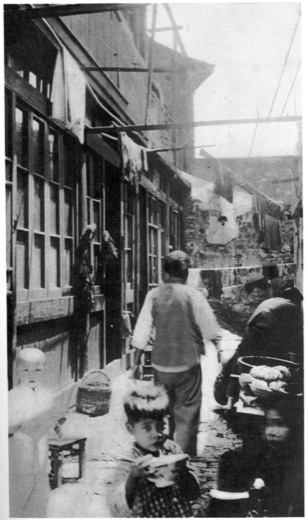 Inside a lilong, 1935Laundry strung across a branch lane, a child eating in the foreground — the ninety-year-old photograph this chapter's footnote on lane life points to. From R. Barz, *Shanghai: Sketches of Present Day Shanghai* (Shanghai, 1935), 152. Courtesy of the Virtual Shanghai Project (Institut de Recherches Asiatiques, Aix-Marseille University–CNRS), virtualshanghai.net. Public domain.Read in Chapter 1 →
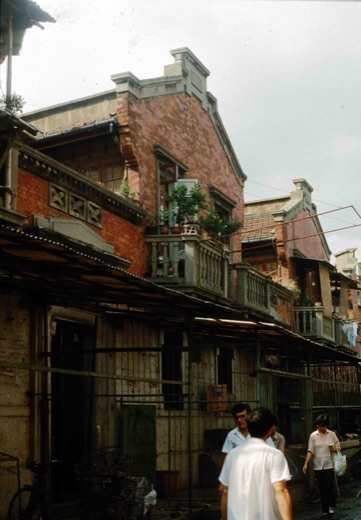 Old housing, October 1987Christian Henriot's own colour photograph of lilong housing, taken during his early fieldwork on Shanghai. Courtesy of the Virtual Shanghai Project (Institut de Recherches Asiatiques, Aix-Marseille University–CNRS), virtualshanghai.net. Copyright held by the Virtual Shanghai Project — free to use here under the project's non-commercial terms; print or commercial reuse needs the project director's written authorisation, which has not been sought.Read in Chapter 1 →
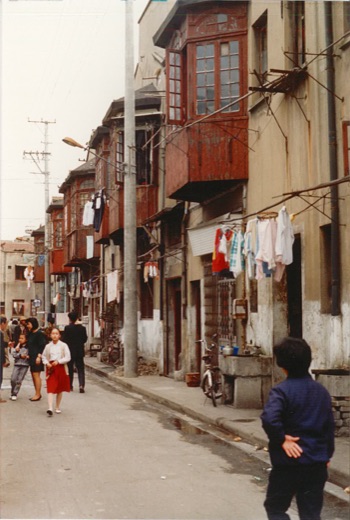 A branch lane, October 1990Christian Henriot's own colour photograph, taken during fieldwork on Shanghai's factories in the late 1980s and early 1990s — laundry, bicycles, a family walking the lane, the same texture this book's own Figure 1.3 finds twenty-three years later. Courtesy of the Virtual Shanghai Project (Institut de Recherches Asiatiques, Aix-Marseille University–CNRS), virtualshanghai.net. Copyright held by the Virtual Shanghai Project — free to use here under the project's non-commercial terms; print or commercial reuse needs the project director's written authorisation, which has not been sought.Read in Chapter 1 →
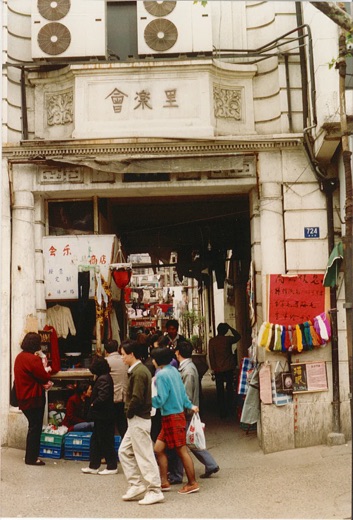 The gate of Huileli (会乐里)Christian Henriot's own colour photograph of the entrance to Huileli, a lilong that housed licensed brothels before 1949 — the companion image to this chapter's footnote on the type's typological elasticity. See Henriot, *Prostitution and Sexuality in Shanghai*, and *Belles de Shanghai* (Paris: CNRS-Éditions, 1997). Courtesy of the Virtual Shanghai Project (Institut de Recherches Asiatiques, Aix-Marseille University–CNRS), virtualshanghai.net. Copyright held by the Virtual Shanghai Project — free to use here under the project's non-commercial terms; print or commercial reuse needs the project director's written authorisation, which has not been sought.Read in Chapter 1 →
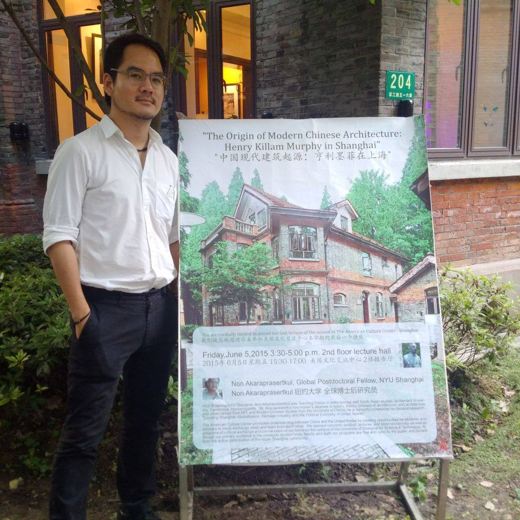 Lecturing on Henry Murphy and Chinese architectureMurphy was the American architect behind the ‘adaptive’ Chinese-renaissance style of the Republican era — exactly the kind of foreign-hand-on-Chinese-form question Chapter 1 asks about the lilong itself.Read in Chapter 1 →
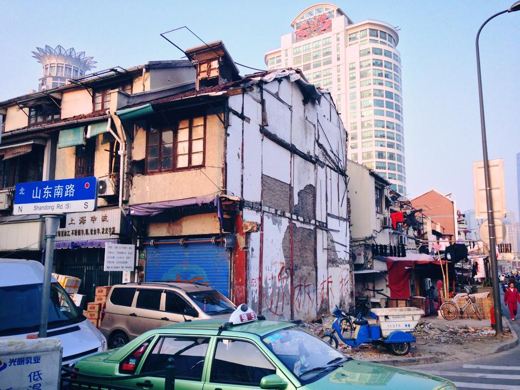 Shophouses coming downKept as titled, typo and all. This is the 拆 the Introduction's footnote describes — the single character painted on condemned buildings that was, for the length of the fieldwork, the city's most legible sentence about its own future.Read in Chapter 1 →
 A former capital building, now a sports universityOne building, several political lives — the Republican-era capital ambitions of a city that briefly imagined itself the seat of a different China, now teaching physical education. Chapter 1's argument about layered use in a single sentence.Read in Chapter 1 →
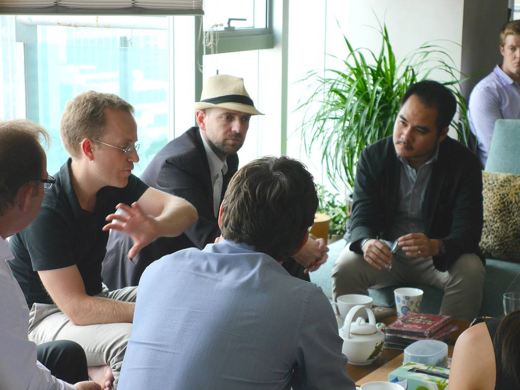 Talking Shanghai strategy with architects and plannersThe professional-architecture side of the fieldwork years, running alongside the ethnography — the same questions about Shanghai's urban form, asked in a different register.Read in Chapter 1 →
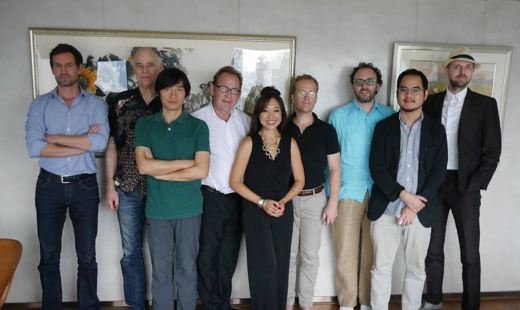 Studying Shanghai with Peggy Liu and colleaguesPeggy Liu is a well-known sustainability advocate in the China space; conversations like this one fed the book's sense of how professionals outside anthropology were reading the same city.Read in Chapter 1 →
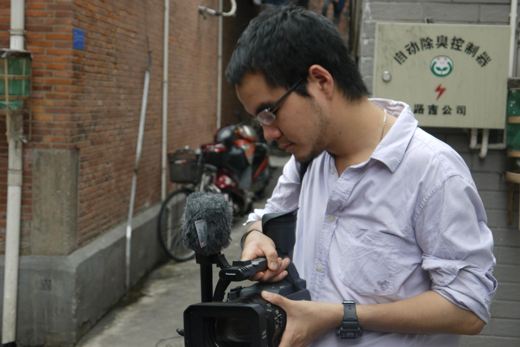 Doing ethnographic fieldworkPhotographed by Yang Chen, an early fieldwork companion. This is the scouting-year fieldwork Chapter 1's history section grows out of, before the tingzijian lease made it official.Read in Chapter 1 →
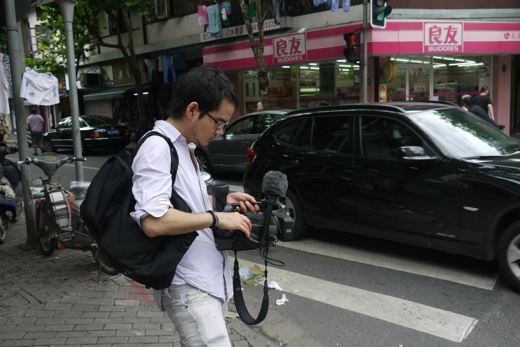 Fieldwork with a proper camera, first summerThe author's own note: the first summer he treated the work as fieldwork rather than tourism, camera included.Read in Chapter 1 →
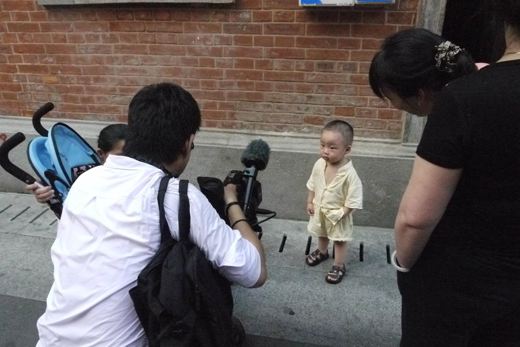 Ethnography in the laneBefore the compound had a pseudonym, before the 198 houses had been counted — just the lane, and the beginning of the habit of standing in it long enough to be treated as someone who belonged there.Read in Chapter 1 →
Chapter 2 — Traditionalism as a Way of Life
5 photographs · each one belongs to a passage in this chapter
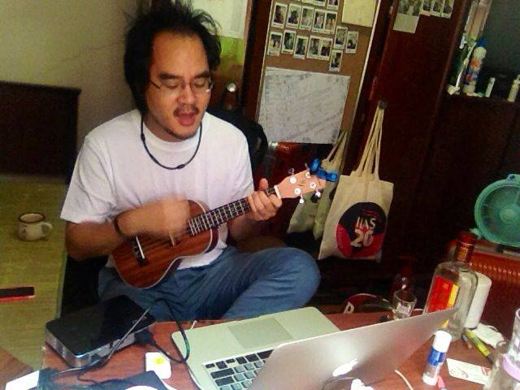 Playing music in the roomThe kind of small domestic ritual Chapter 2 argues is not the residue of an older Shanghai but an active, ongoing performance — including, apparently, the author's own.Read in Chapter 2 →
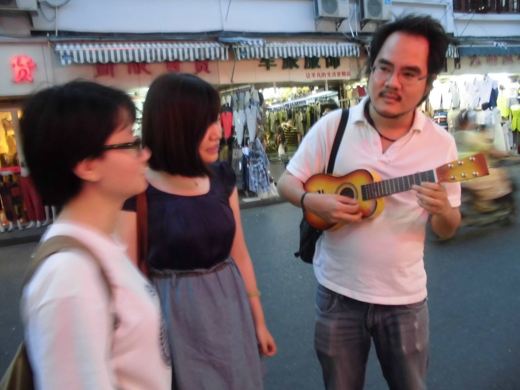 Ukulele through the streetsFieldwork with an instrument on your back changes the kind of conversations strangers start with you — a small, unplanned research method.Read in Chapter 2 →
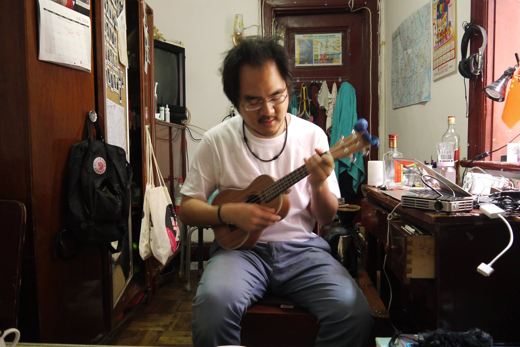 Ukulele in the tingzijianThe pavilion room described at length in Chapter 3 — eight square metres, a bed too wide for the walls, and, evidently, room enough for a ukulele.Read in Chapter 2 →
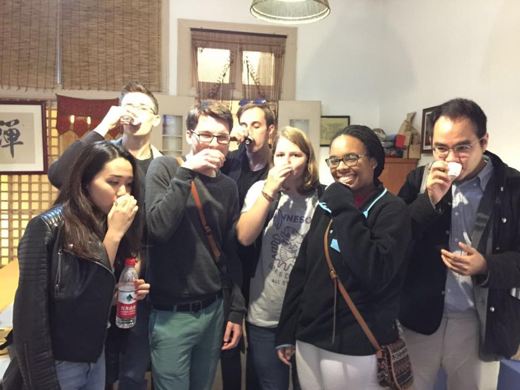 At the teahouse, teaching Chinese traditional cultureA teahouse very much like the Huxinting pictured elsewhere in this book — public sociality as an architecture, taught to a new generation of students a century after it was built.Read in Chapter 2 →
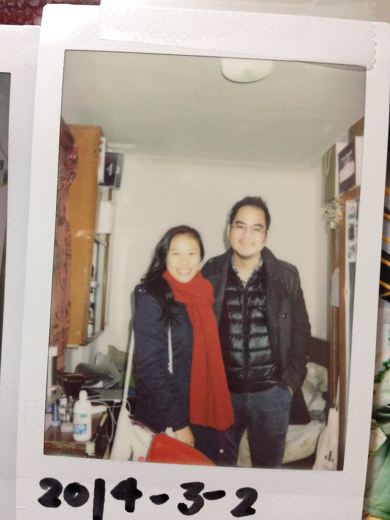 From the fieldwork yearsPart of the same undated run.Read in Chapter 2 →
Chapter 3 — A Sad Trope: Inside the Pavilion Room
7 photographs · each one belongs to a passage in this chapter
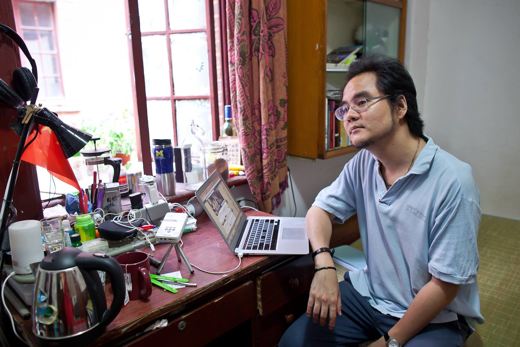 A fine day in the roomThe tingzijian itself, on one of its better days — south-facing, unusually for the type, and still barely wide enough for the custom-built bed frame Chapter 3 describes.Read in Chapter 3 →
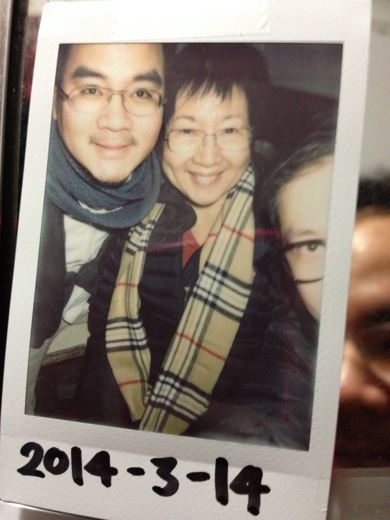 Polaroids of home, pinned up in the roomEight square metres, a bed that had to be lifted to change the sheet, and, taped to the wall, the family the author had left in Bangkok.Read in Chapter 3 →
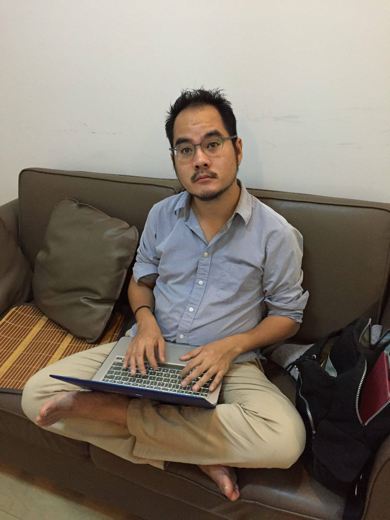 Writing the dissertation, Fudan apartmentBy 2015 the author had moved out of the pavilion room into a Puxi apartment near Fudan — the shift Chapter 3's later pages describe as deliberate: the first year had been about how residents stayed, the later years about what happened to the ones who left.Read in Chapter 3 →
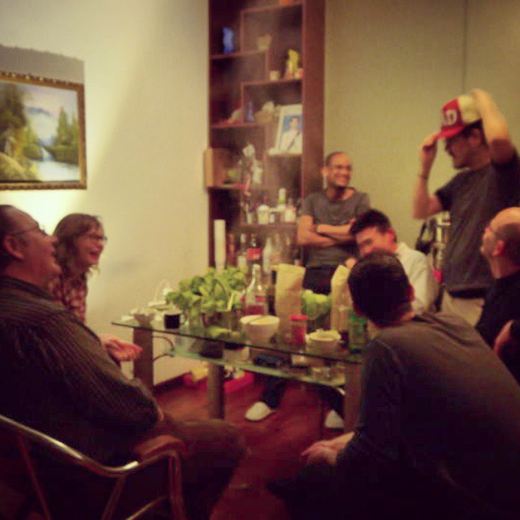 Hot pot in the Pudong apartmentOne of the two moves the fieldwork years required — out of the lilong pavilion room and across the river to Pudong, tracking several Tranquil Light informants who had been relocated the same way.Read in Chapter 3 →
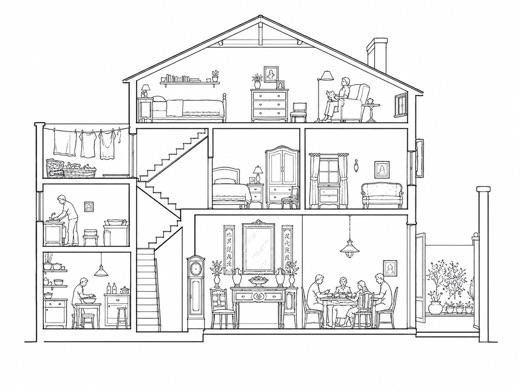 The house as lived space, floor by floorAI-generated cutaway section, populated: the pavilion room at the top, a master bedroom, two households' kitchens, a formal room with an ancestor altar, a shared dining room, and the ground-floor courtyard. A companion to Figure 3.1's abstract section — the same volume, filled in with a household's daily use, one wall away from this chapter's boiler etiquette and shared bathroom.Read in Chapter 3 →
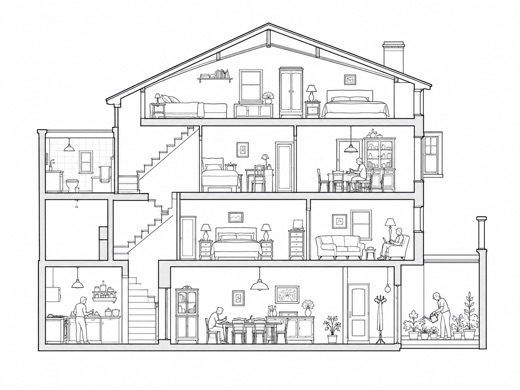 The same house, one renovation laterAI-generated cutaway of the same house type furnished for a contemporary household — a laptop instead of a newspaper, a courtyard used for potted plants rather than washing. Read against the previous plate, the two are the clearest image in this book of what Chapter 5 calls gentrification from within: the same shell, the same room count, a different generation's furniture.Read in Chapter 3 →
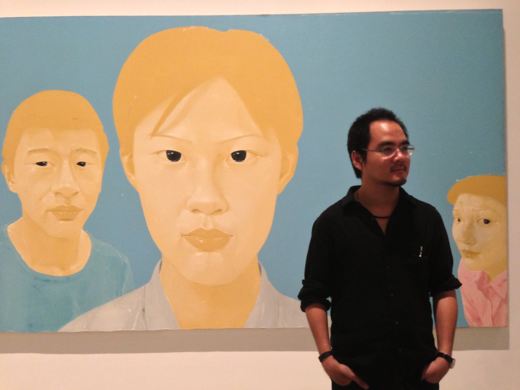 From the fieldwork yearsPart of the same undated run.Read in Chapter 3 →
Chapter 4 — Street Corner Society and Displacement
7 photographs · each one belongs to a passage in this chapter
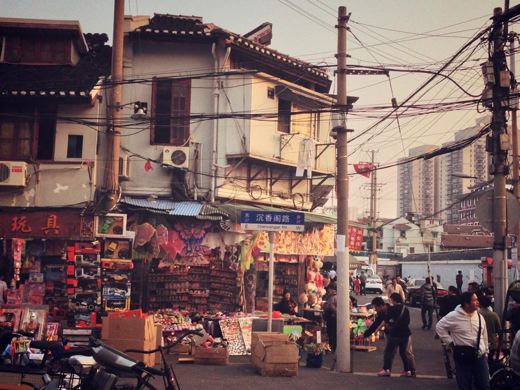 Street corner society, 2014Filed by the author under the exact name of the chapter it belongs to. William Foote Whyte's *Street Corner Society* is the book's explicit model for reading the lottery kiosk as the compound's real seat of politics.Read in Chapter 4 →
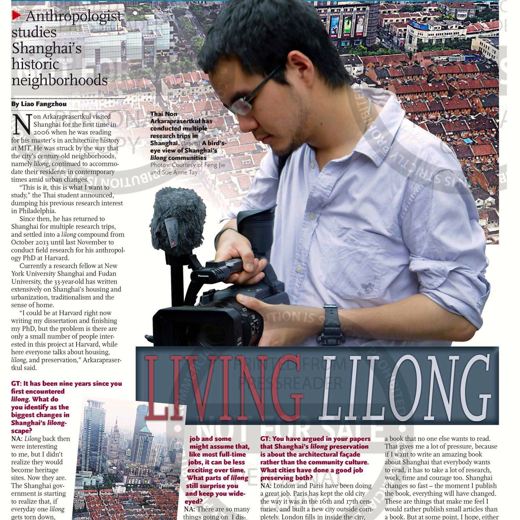 Featured in the news: an anthropologist from ThailandA Thai researcher living inside a Shanghai lilong was, for at least one news outlet, a story in its own right — the kind of outside attention that also thickened the market's and the neighbourhood's read of a visibly foreign presence, a dynamic Chapter 7 returns to directly.Read in Chapter 4 →
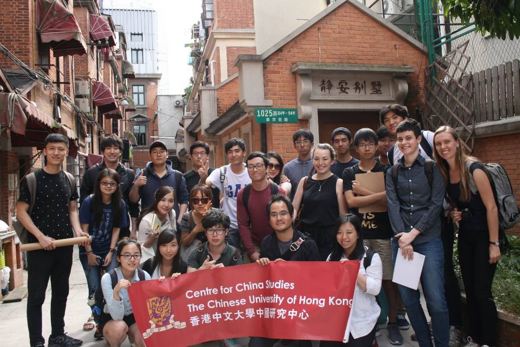 Taking students to the field siteLong after the doctoral fieldwork proper had ended, the compound kept being a teaching site — a place to show students what the kiosk, the lane, and the gate actually looked like.Read in Chapter 4 →
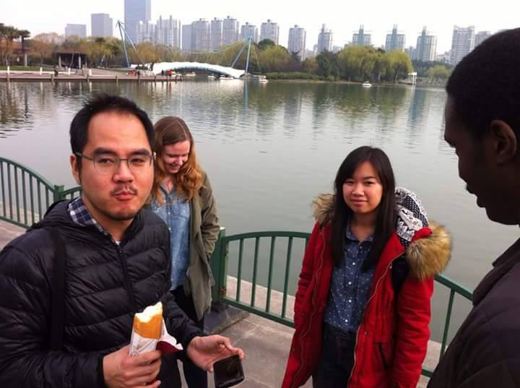 Walking the city with a classThe same slow-attention method the book argues for, taught in real time: walk the city with someone, and let the small repeating encounters do the explaining.Read in Chapter 4 →
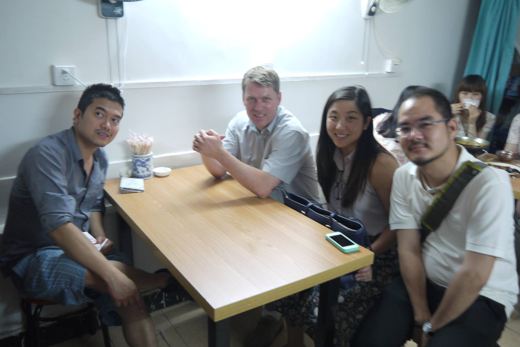 Fieldwork with Erik Harms of YaleErik Harms is an anthropologist of Vietnamese urbanism; visits and conversations like this one were part of the wider community of urban ethnographers the author was in dialogue with while the fieldwork was underway.Read in Chapter 4 →
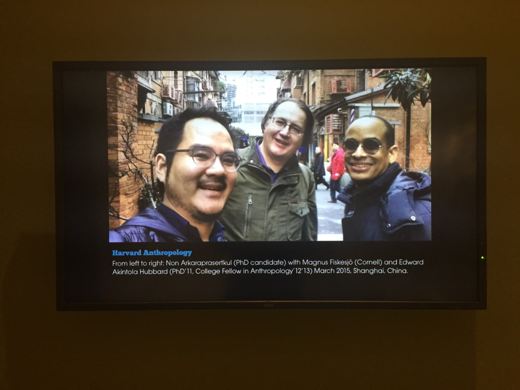 With Magnus Fiskesjö in ShanghaiMagnus Fiskesjö, the Cornell anthropologist of China and Burma, was teaching alongside the author at NYU Shanghai in these years — and is the colleague credited in the Acknowledgments with the introduction, in spring 2016, that led to one of the book's closest later friendships.Read in Chapter 4 →
 Free drinks, here and thereNot every piece of fieldwork infrastructure needs a footnote. Some of it is just knowing people.Read in Chapter 4 →
Chapter 5 — Middleclassification
10 photographs · each one belongs to a passage in this chapter
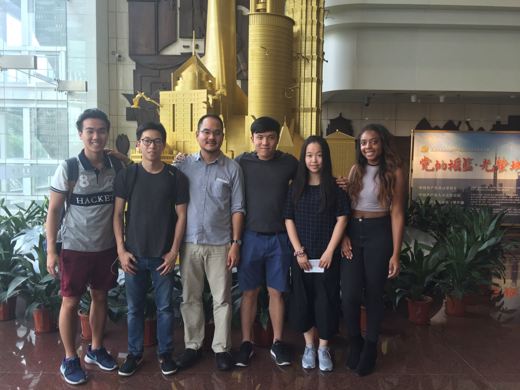 At the Urban Planning Museum with international studentsThe museum's official model of the city — the version Chapter 5 argues residents sometimes perform for outsiders, and sometimes genuinely believe.Read in Chapter 5 →
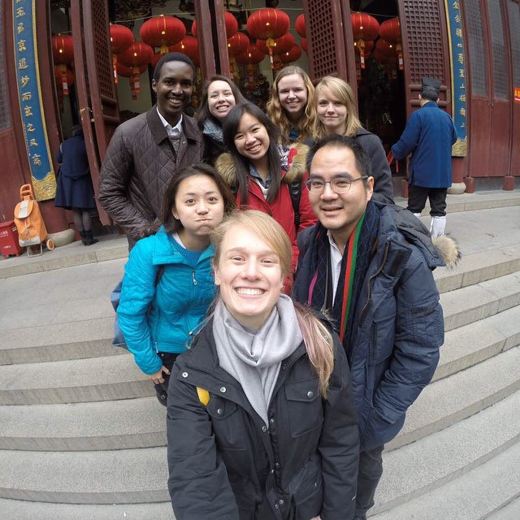 Teaching Shanghai architecture to a mixed international classThe rental economy Chapter 5 describes — foreign tenants like Annette, the compound's original 2005 arrival — depended on exactly this kind of steady flow of international students and young professionals into central Shanghai.Read in Chapter 5 →
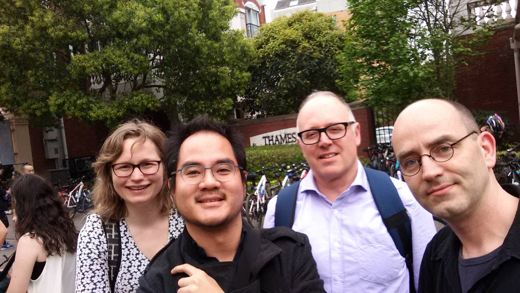 NYU Shanghai colleagues at Thames TownThames Town is Shanghai's faux-English satellite suburb — heritage-as-theme-park, and a useful contrast to the working heritage economy Chapter 5 finds inside Tranquil Light's actual lanes.Read in Chapter 5 →
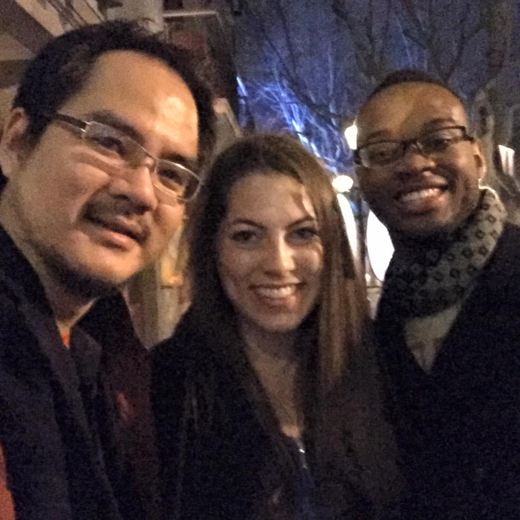 With Harvard students Athena Bowe and Stephane FouchéTwo of the many students who passed through the fieldwork site as visitors before it was a chapter anyone could read.Read in Chapter 5 →
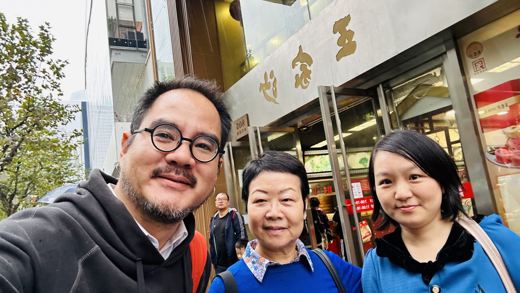 With Qin Shao and Anna Li FeiQin Shao's *Shanghai Gone* is one of the working models this book's house style aims for — concreteness without sentimentality. Meeting her in person, a decade after first reading her, closes a loop the footnotes only gesture at.Read in Chapter 5 →
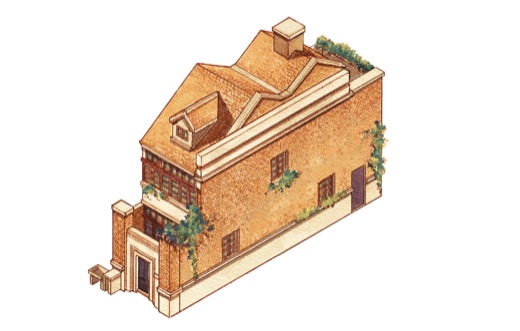
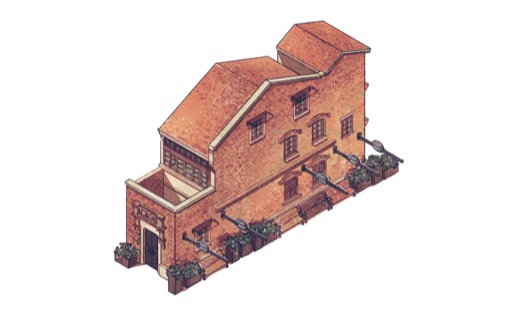
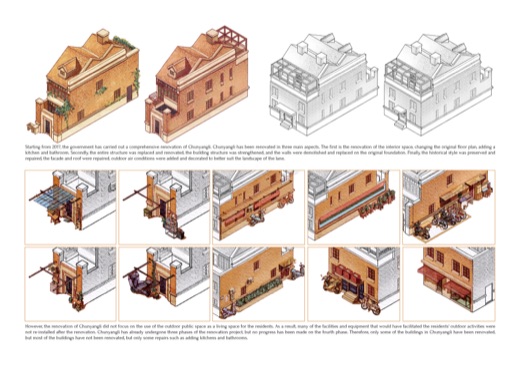 Chunyangli, before and afterAI-generated architectural illustration the author sourced from ArtStation (artwork rJ40KO), showing a 2017 government renovation of the Chunyangli lilong across three stages, plus ten close studies of what came back into the lane afterward — awnings, scooters, planters — and what the renovation left out. Every automated attempt to load the ArtStation page and identify the artist was blocked by Cloudflare's bot-check; the downloaded file carries the fragment ‘yooooola’, which may be the artist's handle, but this is unconfirmed. If you can get the name from the live page, it belongs here.Read in Chapter 5 →
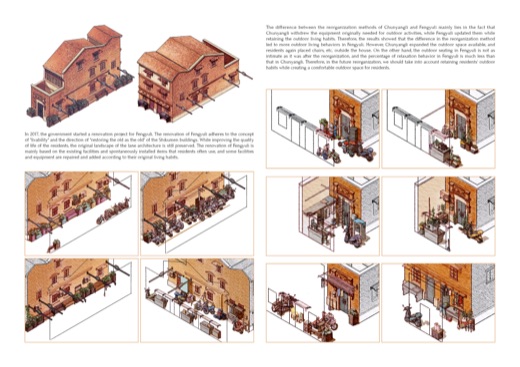 Fengyuli, the other way to renovateA companion illustration to the Chunyangli study, same source and same attribution caveat: Fengyuli's 2017 renovation kept residents' outdoor living habits rather than clearing them, with visibly different results in the lane afterward — exactly the kind of variation this chapter's argument about gentrification from within depends on.Read in Chapter 5 →
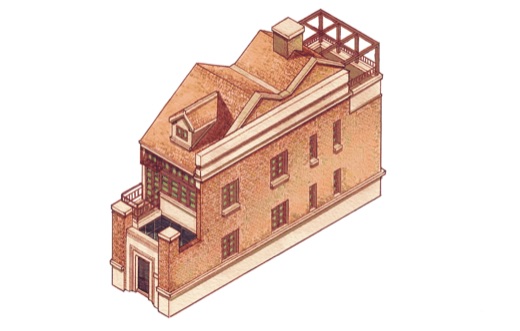 One renovated house, isolatedA single-building detail from the same source and set as the Chunyangli and Fengyuli studies; same attribution caveat.Read in Chapter 5 →
 The same house, before the vines were clearedA companion detail from the same source and set; same attribution caveat.Read in Chapter 5 →
 Fengyuli's shopfront signage, close upA third detail from the same source and set, showing the nameplate signage strung along Fengyuli's lane; same attribution caveat.Read in Chapter 5 →
Chapter 6 — The Rise and Fall of the Value-Added Economy
5 photographs · each one belongs to a passage in this chapter
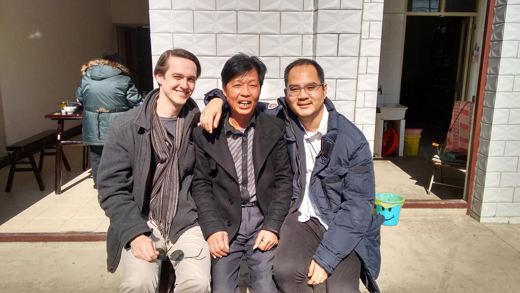 Golden Week on Chongming IslandA rare full week away from the field, on the rural island at the mouth of the Yangtze — a reminder that the value-added economy the chapter describes was booming in central Shanghai while whole other Shanghais stayed agricultural.Read in Chapter 6 →
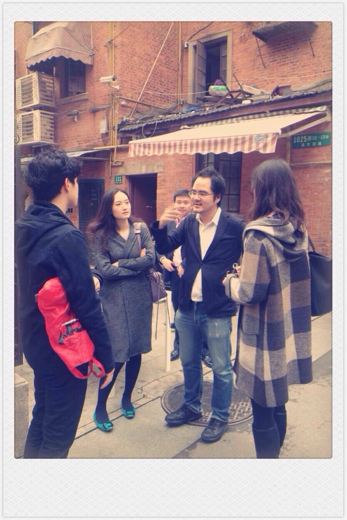 From the fieldwork yearsOne of many unlabelled frames from the core fieldwork period — kept in the record because the ordinary, undocumented majority of fieldwork is also data.Read in Chapter 6 →
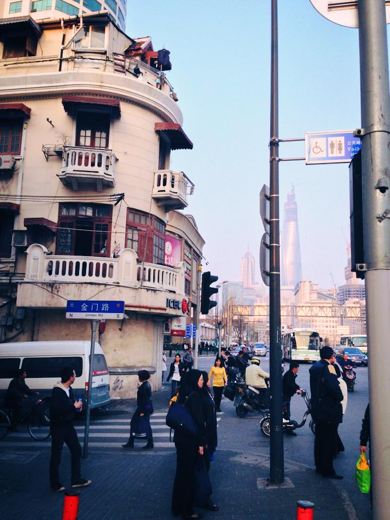
 From the fieldwork yearsPart of the same undated run — the compound's perimeter economy, rising and then, by 2016, mostly gone.Read in Chapter 6 →
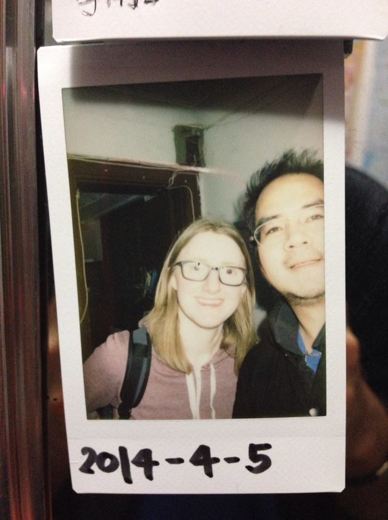
 ShanghaiOne frame from the core fieldwork year, kept in the record without further caption because not every photograph needs one to matter.Read in Chapter 6 →
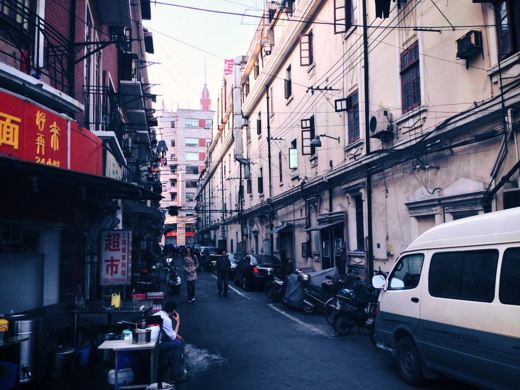
 ShanghaiPart of the same 2014 run.Read in Chapter 6 →
Chapter 7 — The Meaning of Being a Man
5 photographs · each one belongs to a passage in this chapter
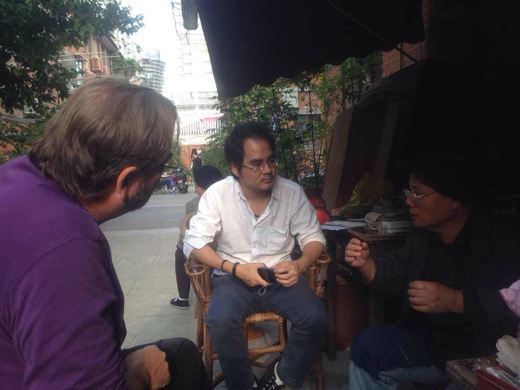
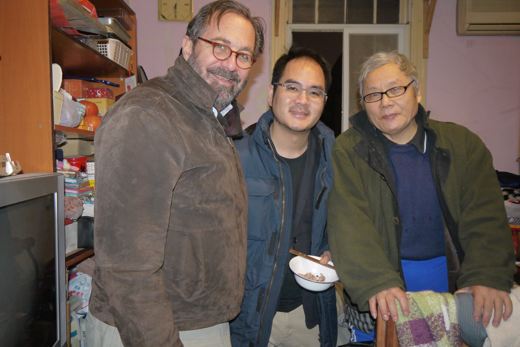 With Matthew Gutmann, Brown UniversityThe Acknowledgments call him the field committee member the author's own Harvard committee couldn't be. Gutmann's own book, *Are Men Animals?*, credits their Sunday afternoons at Blind Date Corner directly — a rare case of two researchers independently writing up the same conversations.Read in Chapter 7 →
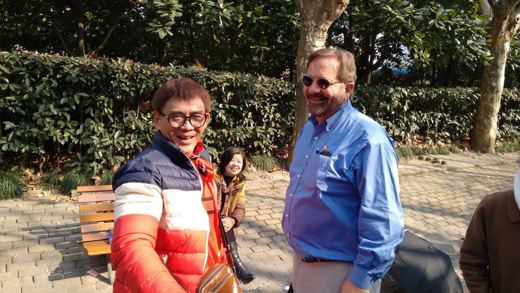
 With Prof. Matthew Gutmann‘Gu Laoshi’ to the people who met him — a name Chapter 7's footnotes note that a great many Blind Date Corner regulars still remember, less for his self-described ‘rustic’ Chinese than for the fact that a big, visibly foreign professor kept coming back to the same park, year after year.Read in Chapter 7 →
 Gutmann with his key informantsThe matchmakers and parents Gutmann's own chapter on Shanghai's Blind Date Corner is built from — some of the same faces the author's own Sundays there kept crossing.Read in Chapter 7 →
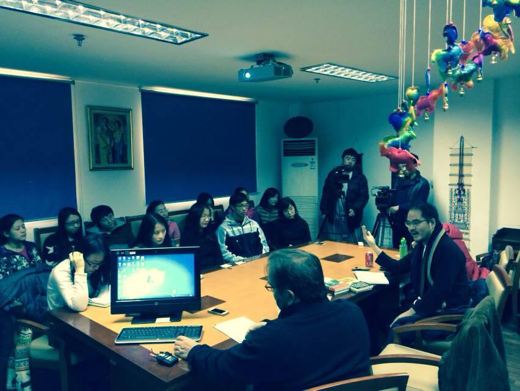 Co-teaching a seminar at Fudan with GutmannThe friendship was not only fieldwork and beer. It was also, more than once, a shared classroom.Read in Chapter 7 →
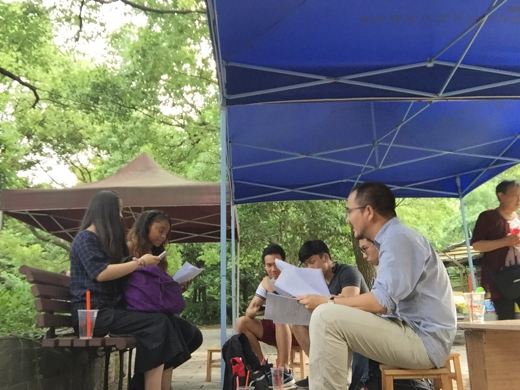 Teaching at People's Park itselfThe Blind Date Corner in daylight, with a class in tow — the exact patch of pavement Chapter 7 opens on, several hundred handwritten flyers deep in the same Sunday ritual it describes.Read in Chapter 7 →
Conclusion — Reading the City Slowly
12 photographs · each one belongs to a passage in this chapter
 Back on the China circuit — Fuzhou Digital ForumThe Conclusion's bridge from Tranquil Light to citizen-centric smart-city work in Thailand runs, in practice, through conference rooms like this one.Read in Conclusion →
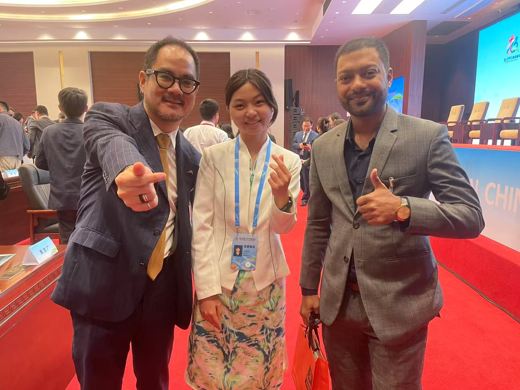 Returning to China for the Digital ForumPart of the same 2025 circuit — Shanghai lilong lessons, still travelling, now arriving as smart-city policy talks rather than fieldnotes.Read in Conclusion →
 Receiving an award with the Chonburi mayorTomorrow City China, 2025 — the same circuit of municipal exchange that, on the Thai side, produced the Nakhon Si Thammarat platform the Conclusion treats as the book's clearest real-world test case.Read in Conclusion →
 Tomorrow City ChinaOne of several frames from the 2025 Tomorrow City China programme, where Thai and Chinese municipal officials compared notes on citizen-facing urban technology.Read in Conclusion →
 Tomorrow City China award ceremonyThe kind of recognition that, per the Conclusion's own admission, was never the point of the Nakhon Si Thammarat work — but is still a useful marker of how far the ‘lessons travel’ argument has actually travelled.Read in Conclusion →
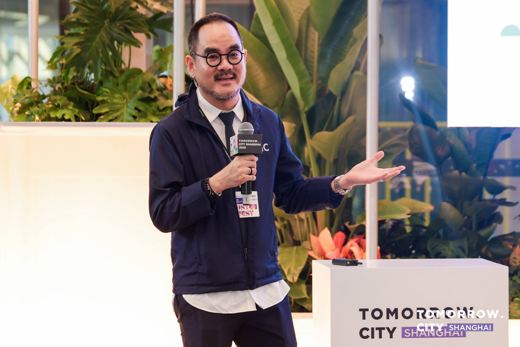 Tomorrow City China, Shanghai legThe programme's Shanghai stop — bringing the smart-city circuit back, briefly, to the city where the whole method was first learned.Read in Conclusion →
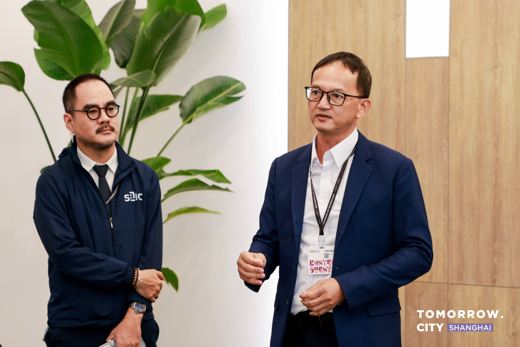 With Mayor Kanop Ketchart of Nakhon Si ThammaratThe mayor named directly in the Prologue's footnote on the @NakhonCity platform's most recent numbers — 110,128 users, 37,303 complaints resolved, as of his October 2025 presentation.Read in Conclusion →
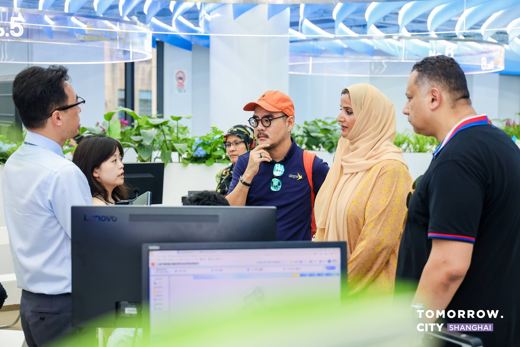 Tomorrow City ShanghaiShanghai as a stop on the smart-city circuit rather than a fieldwork site — the same city, a very different reason for being in it.Read in Conclusion →
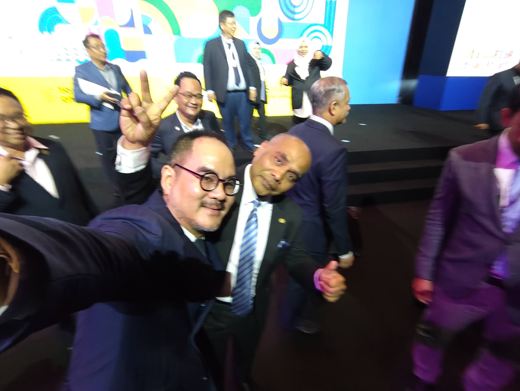 With the Director-General of PLANMalaysiaRegional counterparts comparing municipal technology programmes — the wider Southeast Asian context the Conclusion's Nakhon Si Thammarat section only briefly gestures at.Read in Conclusion →
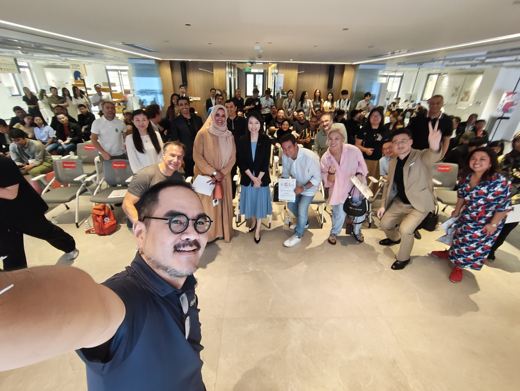 With colleagues at Tomorrow City ShanghaiThe people who make a conference programme actually work, on the ground, in Shanghai, in 2025.Read in Conclusion →
 Shanghai Tower with visiting Thai mayorsThai municipal leaders touring Shanghai's tallest building — one small piece of the two-way traffic between Thai and Chinese urban policy that the Conclusion argues runs both directions.Read in Conclusion →
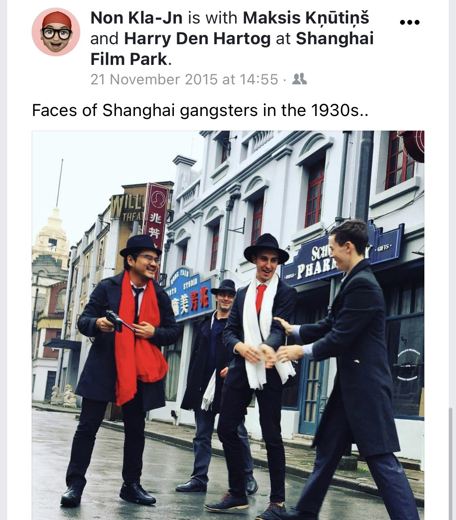 Shanghai Film Park, with students, 2025The backlot city — half of old Shanghai rebuilt as a film set, in a country that has also, this book argues, been rebuilding old Shanghai in earnest for entirely different reasons.Read in Conclusion →